
RevengeIdeas
Served Cold
The boyars of Wallachia had murdered his father in a marsh and buried his blinded brother alive. When Vlad III took the throne, he waited for the holiest feast of the year to settle the account.
Fifteenth-century Wallachia was less a country than a contested doorway. It sat on the Danube between two giants — the Kingdom of Hungary to the north and west, the expanding Ottoman Empire to the south — and its princes ruled at the sufferance of whichever neighbour was strongest that season. The voivode, or prince, was not a hereditary monarch in any settled sense. He was elected, deposed, restored and murdered by a class of landed nobles called the boyars, who controlled the estates, the soldiers and the money, and who treated the throne as a prize to be auctioned among their factions. The result was chronic instability. Between roughly 1418 and 1456, the princely seat at Târgoviște changed hands more than a dozen times. Two rival dynastic lines — the Dănești and the Drăculești — fought a long and bloody contest, and the boyars switched their allegiance to whichever claimant served their interests, then switched again the moment a better offer arrived. A prince who could not command the boyars could not survive. A prince who frightened them might. This was the brutal arithmetic into which Vlad III was born, probably at Sighișoara in Transylvania, around 1431.
His father was Vlad II, called Vlad Dracul. The byname came from the Order of the Dragon, a chivalric brotherhood founded by Sigismund of Luxembourg, King of Hungary and later Holy Roman Emperor, sworn to defend Christendom against the Ottoman Turks. Vlad II had been inducted into the order, and 'Dracul' — from the Latin draco, dragon — marked the honour. To his son the name passed in its diminutive form: Drăculea, 'son of the Dragon', which the centuries would harden into Dracula. In the Romanian of the period the word also carried the second meaning of 'devil', a double edge that history would find irresistible. Vlad Dracul ruled Wallachia from 1436, but his position was impossible. Caught between his oath to Hungary and the overwhelming pressure of the Ottoman Sultan Murad II, he tried to play both sides. As a guarantee of his loyalty to the Sultan, he was forced to surrender two of his sons as hostages — the young Vlad and his even younger brother Radu — who were held in Ottoman custody for several years. It was a formative captivity. The boy who would become a byword for cruelty learned statecraft, languages and the impaling of prisoners, a recognised Ottoman punishment, during years spent as a pawn far from home. His brother Radu, by contrast, found favour at the Ottoman court and would later be remembered as Radu cel Frumos, 'Radu the Handsome', returning as a Turkish-backed rival to his own brother's throne.
In 1447 the fragile arrangement collapsed. John Hunyadi, the powerful regent of Hungary and the most formidable anti-Ottoman commander of the age, had lost patience with Vlad Dracul's double-dealing. He backed a rival claimant from the Dănești line, Vladislav II, and moved against the sitting prince. In the violence that followed, Vlad Dracul was hunted down and killed in the marshes near Bălteni, just outside the capital. The most repeated account holds that the killing was carried out with the collusion of the Wallachian boyars who had turned against him — the same men who had raised him up now delivering him to his enemies. The fate of the elder brother was worse. Mircea, Vlad's older sibling and his father's designated heir, was seized by the boyars and citizens of Târgoviște. According to the chronicles, they blinded him with red-hot iron and then buried him alive. When his grave was later opened, the body was reportedly found face down, the position of a man who had woken in the earth and struggled. For Vlad, then a teenager held in Ottoman hands, the grievance was now total: a father betrayed and slaughtered in a swamp, a brother tortured, blinded and entombed while still breathing — and the men responsible were not foreign invaders but the native nobility of his own land, the boyars who were supposed to be the prince's council.
Vlad's first grasp at the throne came almost at once and lasted barely a breath. In 1448, taking advantage of Hunyadi's absence on the disastrous campaign that ended at the Second Battle of Kosovo, the teenaged Vlad seized power in Wallachia with Ottoman support — and held it for perhaps two months before Vladislav II returned and drove him out. He spent the following years in exile and calculation: first in Ottoman territory, then, remarkably, reconciling with the very man who had destroyed his father. By the early 1450s Vlad had attached himself to John Hunyadi, the master of the realpolitik that defined his century, and recast himself as a Hungarian-backed candidate against Vladislav II, who had drifted into the Ottoman orbit. The patience paid out in 1456. With Hunyadi engaged in the relief of Belgrade — the great Christian victory in which the old commander would shortly die of plague — Vlad invaded Wallachia, killed Vladislav II in battle, and took the throne for the second time. He was around twenty-five. This time he meant to keep it, and he understood, with a clarity sharpened by nine years of grief, exactly what had destroyed his father: a boyar class that no prince could trust and no prince had ever truly mastered. He had not forgotten the marsh or the grave. He had simply been waiting for the position from which to answer them.
The reckoning, by the most repeated account, came at Easter — most often dated to 1457, early in his reign. The story survives chiefly in two strands of source material: the German pamphlets printed in the decades after his death, which painted him as a sadist for a hostile audience, and the Russian narrative of Fyodor Kuritsyn, which treated his severity as harsh justice. They are propaganda of opposite tempers, and the details must be held loosely. But the core of the episode is consistent across them and forms the foundation of Vlad's reputation. Vlad is said to have invited the boyars of Târgoviște and their families to a grand feast on Easter Sunday — the holiest day of the Christian calendar, when no one expected violence and everyone arrived in their finest dress. These were the great families of Wallachia, the men whose fathers and elder kinsmen had presided over the killing of Vlad Dracul and the burying of Mircea. When the eating was done, Vlad reportedly turned on his guests. The older nobles, those he held responsible for the past treacheries and for the dizzying turnover of princes, were seized on the spot. According to the chronicles, the boyars were impaled — set upon stakes around the city and the prince's court, the Ottoman punishment Vlad had learned as a hostage now turned upon the men who had made him one.
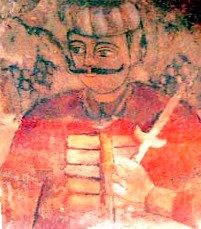
The younger and fitter boyars and their families met a different sentence, one with a grim economy to it. They were marched, still in their soiled feast-day finery, some fifty miles north to the ruins of a fortress above the Argeș river — the stronghold that history remembers as Poenari Castle, clinging to a crag in the Carpathian foothills. There, the account runs, they were set to forced labour, hauling stone and firing brick to rebuild the castle into a defensible mountain redoubt for their prince. They laboured, it is said, until the clothes rotted from their bodies and most of them died at the work. Poenari, restored on the bones of the men who had murdered his family, became one of Vlad's principal strongholds. Whatever the precise figures — and the sources give none that can be trusted — the strategic logic is unmistakable. In a single stroke Vlad had decapitated the old boyar aristocracy, the faction-ridden class that had killed his father and unseated prince after prince. The estates and offices of the dead passed to new men, lower-born and loyal, who owed their rise entirely to Vlad and had no independent base from which to betray him. The Easter massacre was vengeance, plainly and personally so. It was also the most ruthless act of political consolidation in Wallachian memory. The two motives were the same act.
The boyars were the beginning, not the end. For the next six years Vlad ruled with a severity that became legendary even by the standards of a savage age. He waged war on crime and on disloyalty with the same instrument — the stake — and the German pamphlets that demonised him also, perhaps unintentionally, recorded the discipline it produced. The most famous tale claims he left a golden cup at a public fountain, and that for the length of his reign no one dared steal it. Foreign merchants who cheated, Saxon townsmen of Transylvania who defied him, Ottoman envoys who would not remove their turbans — all, in the stories, found their way onto the stakes. The defining image came in 1462, when Sultan Mehmed II — the conqueror of Constantinople — invaded Wallachia to crush his former hostage. Advancing toward Târgoviște, the Ottoman army is reported to have come upon a 'forest of the impaled': thousands of Turkish and Bulgarian prisoners set on stakes across a field more than a kilometre wide, left to rot in the open air. The chroniclers record that Mehmed, who had seen and ordered every cruelty of his century, was shaken by the sight and withdrew his vanguard. It is from this campaign, and this scene, that the byname Vlad Țepeș — 'Vlad the Impaler' — descends. He did not invent the punishment, but he made it his signature, and history made it his name.
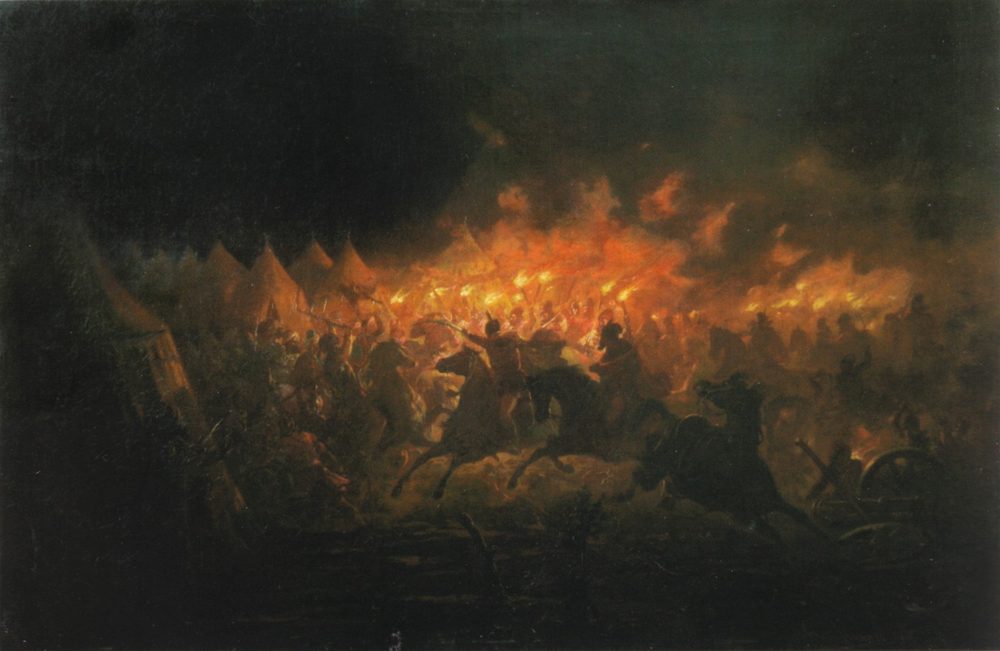
Vlad's own end was in keeping with his beginning. Betrayed and abandoned, deposed in 1462 when his brother Radu arrived at the head of an Ottoman army, he spent years imprisoned by his erstwhile Hungarian ally Matthias Corvinus. He clawed his way back to the throne one last time in 1476 and was killed in battle against the Turks within weeks, his head reportedly carried to Constantinople and displayed on a stake — the instrument of his vengeance turned, at the last, upon him. He was perhaps forty-five. In Romania he is remembered with a complicated reverence, a national defender who held the Danube against the Ottoman tide; in the West the German pamphlets and the lurid name did their work, and in 1897 the Irish novelist Bram Stoker borrowed the family byname Dracula for a Transylvanian vampire he never quite anchored to the real man. The grievance that began it — a father in the marsh, a brother in the grave — is the smallest and most human part of the legend, and the part that explains all the rest.
Image: Portrait of Vlad III, Ambras Castle collection (c. 1560, after a lost original). Public domain, via Wikimedia Commons.
History gave him a monster's reputation and a vampire's name. He earned both starting with a single grudge over a marsh and a grave.
They killed her husband, then sent ambassadors to ask her to marry their prince. She welcomed them warmly — and erased their entire people in four escalating acts of horror.
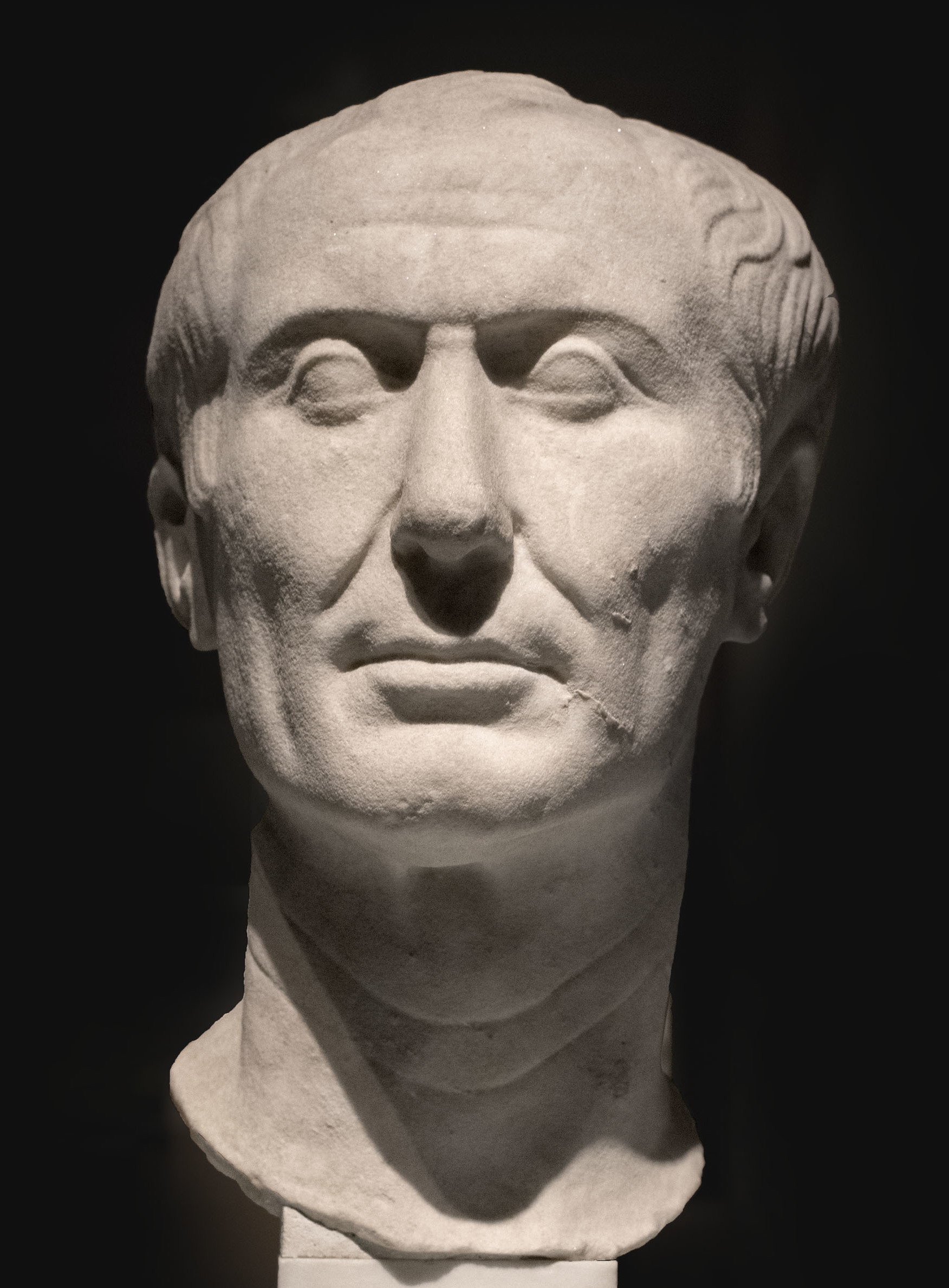
Kidnapped and held for ransom, the young Caesar told his captors exactly what he would do to them once freed. They thought it was a joke. It was not a joke.