
RevengeIdeas
Served Cold
Kidnapped and held for ransom, the young Caesar told his captors exactly what he would do to them once freed. They thought it was a joke. It was not a joke.
In the first century before Christ, the eastern Mediterranean was a working sea — grain ships, slave traders, ambassadors and tax revenue moving between the ports of Asia Minor, the Aegean islands and Rome. It was also, increasingly, a lawless one. The kingdoms that had once policed these waters had decayed, Rome had not yet replaced them, and into that vacuum had poured the pirates. They were not the ragged opportunists of legend. By this period the corsairs operating out of Cilicia, the rugged southern coast of what is now Turkey, were a power in their own right: organised into fleets, equipped with fast galleys, holding fortified harbours, and rich enough to gild their oars and dress their crews in finery. Plutarch records that they had grown so confident they raided the Italian coast itself and seized Roman magistrates with their attendants. Their most lucrative trade was not plunder but people. A captured nobleman or wealthy traveller was worth far more alive and ransomed than dead, and the pirates had refined the business of kidnapping into something like a tariff system. The greater the prisoner, the higher the price — and the prisoners, knowing the alternative, generally paid quietly, gratefully, and went home. The whole arrangement depended on a tacit understanding between captor and captive: that this was a transaction, that no one would take it personally, and that once the money changed hands the matter was closed. Into this understanding, around 75 BC, sailed a young Roman of about twenty-five, crossing the Aegean toward the island of Rhodes. He was travelling to study rhetoric under Apollonius Molon, the most celebrated teacher of oratory of the age. His name was Gaius Julius Caesar. He was, at this point, nobody in particular — a patrician of an ancient but impoverished family, marked out by his connections and his nerve rather than by any achievement. The pirates who took his ship off the island of Pharmacusa, near Miletus, can have had no idea who they had caught. They were about to find out.
The capture itself was unremarkable. The pirates seized the vessel and informed their new prisoner of his price: twenty talents of silver. It was a substantial sum, a respectable valuation for a young man of good family. What followed is the first detail that tells you the captors had misjudged their man. Caesar, according to Plutarch, laughed at them. Twenty talents, he said, was an insult. They plainly did not understand whom they had taken. He told them he was worth fifty, and he would pay fifty — and he then dispatched his attendants to the cities of the coast to raise the larger figure on his behalf, keeping only a physician and two servants with him among the pirates. This was not bravado for its own sake. Caesar had grasped something the pirates had not: that in a contest of nerve, the man who sets the terms holds the advantage. By raising his own ransom he had turned the negotiation upside down. He was no longer a frightened captive haggling for his life; he was a person of evident importance condescending to the men who held him. The psychological effect, across the weeks that followed, was considerable. A prisoner who valued himself at fifty talents was not a prisoner who could be casually mistreated. It bought him, in practice, the run of the ship. While his people scattered to the coastal towns to gather the silver — a process that took the better part of thirty-eight days — Caesar settled into captivity as though it were an inconvenient houseguest's stay rather than an ordeal. The pirates, expecting fear, got the opposite, and they did not quite know what to make of it.
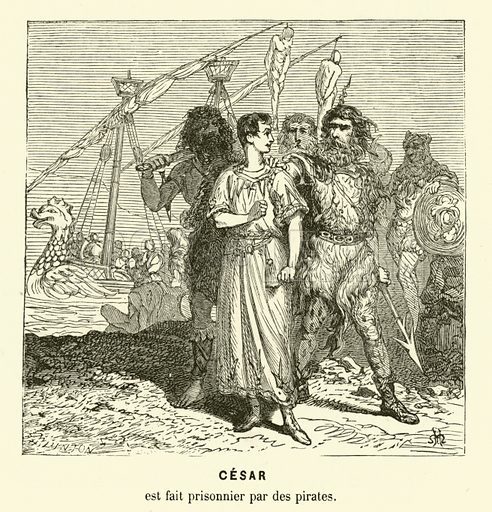
The interval Caesar spent among the Cilicians is the part of the story that has fascinated readers for two thousand years, because his conduct made no sense by the ordinary rules of hostage and captor. Plutarch describes a young man who behaved not as a prisoner but as a commander on holiday among inferiors. He joined the pirates in their exercises and games. He wrote poems and speeches and read them aloud to his captors, and when they failed to applaud — when they listened with the indifference of men who had no ear for Attic rhetoric — he called them illiterate barbarians to their faces and told them, openly, that he would one day hang them all. He said it so often, and with such cheerful matter-of-factness, that the pirates treated it as a standing joke. When he wished to sleep, the story goes, he sent word ordering them to be silent, and they obeyed. They had, in effect, adopted him as a kind of entertaining mascot, a high-spirited young aristocrat playing at being their master, and they found his threats of crucifixion amusing precisely because they could not imagine the scenario in which a lone captive made good on them. He was outnumbered, unarmed and far from any Roman authority. The threat was absurd. They laughed. What none of them registered was that Caesar was not playing. The familiarity, the games, the easy contempt — all of it was a man taking the measure of his enemy at leisure, learning their habits, their harbour, their strength and their carelessness, against the day when he would return on his own terms. He was promising them exactly what he intended to do. The only liberty he took with the truth concerned the manner of it, and even that, in the end, he honoured more mercifully than he need have.
At last the ransom arrived. The cities of the province, chief among them Miletus, had assembled the fifty talents, and Caesar's people brought the silver to Pharmacusa. The pirates took their payment and, true to the unwritten code of their trade, released him. The transaction was complete. By every expectation that governed such affairs, the matter was now closed: Caesar was free, the corsairs were paid, and a sensible man in his position would have continued on to Rhodes, counted himself fortunate, and let the sea keep its secrets. Caesar went instead to Miletus, and the moment he reached harbour he set about doing precisely what he had told the pirates, between poems, that he would do. He had no official commission, no fleet of his own and no legal authority to raise one — he was a private citizen acting entirely on his own initiative. None of that slowed him. He manned several ships at his own arrangement, gathered a force, and put back out to sea after the men who had held him. The pirates, it appears, had not even troubled to move on. They were still lying at anchor by the island, secure in the belief that their late guest was now somebody else's problem. He fell on them before they could scatter. Plutarch records that he captured the greater part of them and took back not only his own fifty talents but the rest of their accumulated plunder besides. The men who had laughed at the threat of crucifixion now found themselves the prisoners, lodged in the gaol at Pergamon, while the young Roman who had promised them their ends went to find the man with the power to authorise those ends.
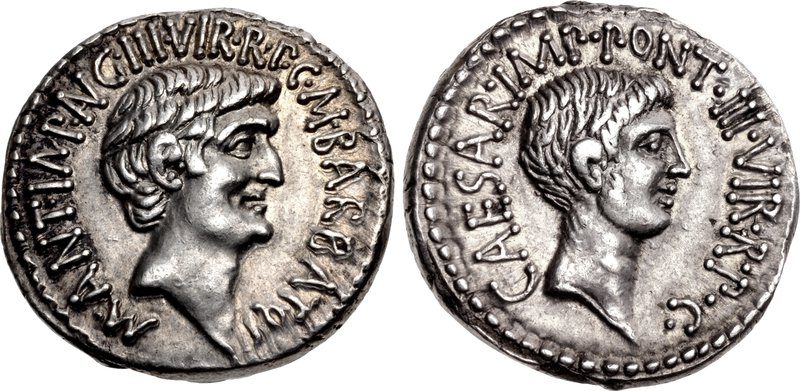
That man was Marcus Junius Juncus, the Roman governor of the province of Asia. Caesar presented himself, reported the capture, and expected the magistrate to order the prisoners punished. Juncus, however, was less interested in justice than in profit. The pirates and their seized goods represented a windfall, and a governor had wide discretion over the disposal of captives. He temporised. He would, he indicated, decide the fate of the prisoners himself, in his own time — which Caesar correctly read as an intention to sell them as slaves and pocket the proceeds, leaving the threat of crucifixion as an empty boast. Caesar did not wait for the governor's verdict. He went back to Pergamon, took the prisoners out of the gaol on his own authority, and had them crucified — exactly as he had promised them, over and over, while they laughed at him on the deck of their galley. Crucifixion was the death Rome reserved for slaves, rebels and pirates: slow, public and degrading, a punishment designed less to kill than to make an example. He had told them this would happen. He had told them in plain words. They had treated it as the conceit of a clever boy. Now it was done. There is one detail in Plutarch that complicates the picture, and it is worth setting down honestly. Because the pirates had, in their fashion, treated him well during his captivity — because they had let him sleep, indulged his speeches and kept to the courtesies of their trade — Caesar is said to have first had their throats cut before they were fixed to the crosses, so that they should not suffer the full agony of the cross while living. Suetonius records the same act of crucifixion. By this account it was, by the standards of the age, an act of clemency: he killed them as he had vowed, but spared them the worst of it. Whether one finds that mercy or merely a refinement of ruthlessness is left to the reader.
The immediate aftermath was a young man considerably richer, considerably more notorious, and entirely vindicated. He had recovered his ransom, seized the pirates' treasure, and demonstrated — to anyone in the province paying attention — that he was prepared to act decisively and without permission when permission was slow in coming. The episode cost him nothing in reputation and gained him a great deal. The corsairs of the Aegean had taken a nobody and, by their carelessness, helped manufacture a legend. Caesar resumed his journey to Rhodes and his studies under Apollonius Molon as though nothing of consequence had interrupted them. The story endured because both of the great imperial biographers thought it worth telling. Plutarch gives it in full in his Life of Caesar; Suetonius records the crucifixion of the pirates in the Lives of the Caesars. They preserved it not as an isolated adventure but as a key to the character of the man who would later cross the Rubicon, master Gaul, defeat Pompey and end the Republic. In a single early episode you can see the whole figure assembled: the supreme self-assurance, the cool reading of other men's weaknesses, the refusal to accept a subordinate's valuation of his own worth, the willingness to act outside the law when the law moved too slowly, and the absolute follow-through. He told his captors exactly what he would do, and then he did it. That is the part history kept. Not the kidnapping, which was ordinary, nor the ransom, which was a routine transaction of a lawless sea. What history kept was the gap between the laughter on the deck and the crosses at Pergamon — the distance between what the pirates believed about the smiling young man among them and what that young man was, in fact, calmly intending the entire time. They had been warned. They had been warned repeatedly, and pleasantly, and in detail. They simply could not bring themselves to believe that a prisoner could mean it.
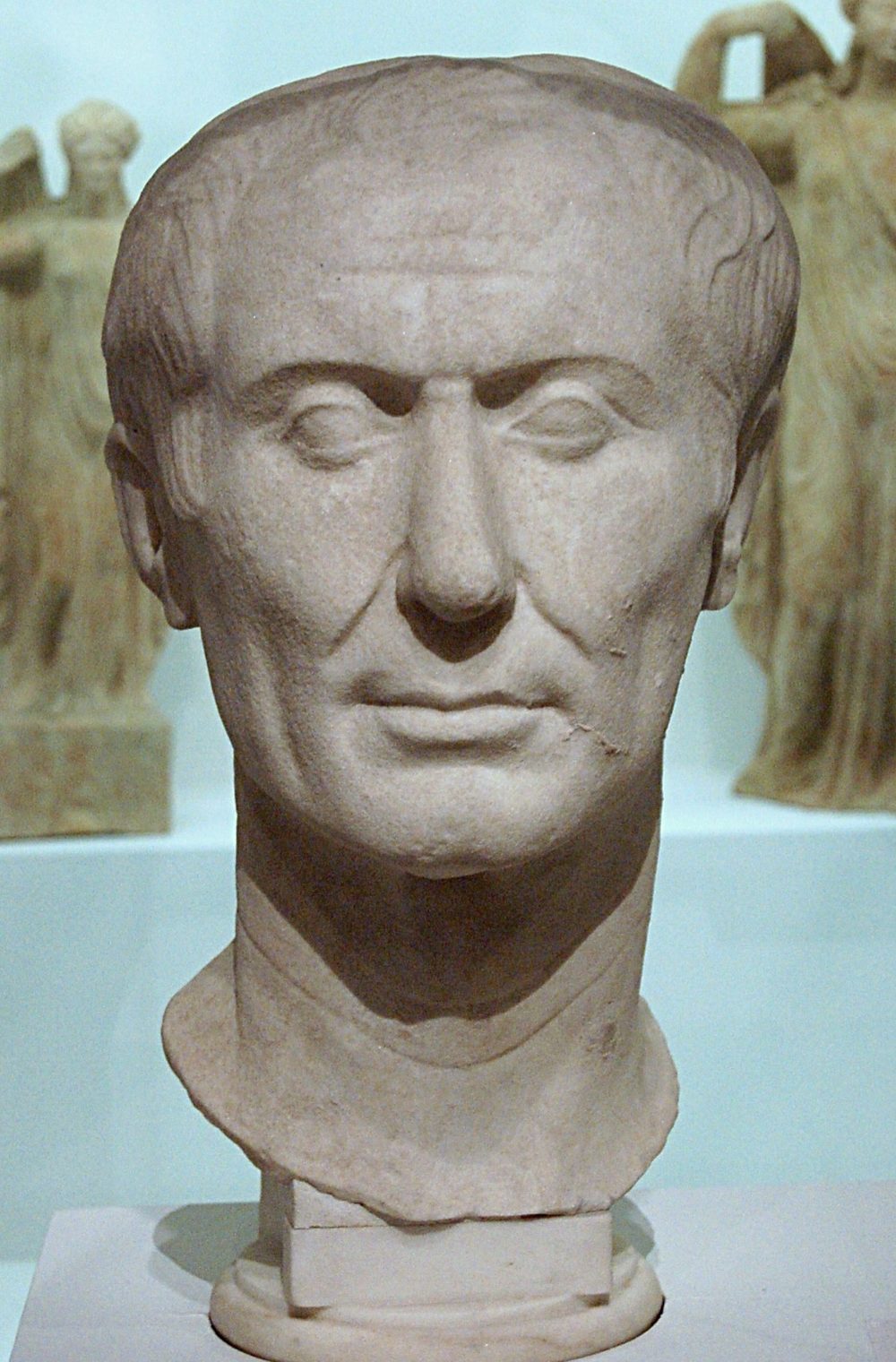
Image: Portrait of Julius Caesar. Public domain, via Wikimedia Commons.
He had warned them precisely what would happen. Their mistake was assuming a man that confident was bluffing.

They killed her husband, then sent ambassadors to ask her to marry their prince. She welcomed them warmly — and erased their entire people in four escalating acts of horror.
Their master was forced to kill himself over an insult. His samurai waited almost two years — playing the part of broken, drunken failures — before they struck.