
RevengeIdeas
Served Cold
Cyrus the Great had conquered half the known world. When he took her son with a cheap trick instead of a battle, the queen of the Massagetae warned him once to leave. He didn't.
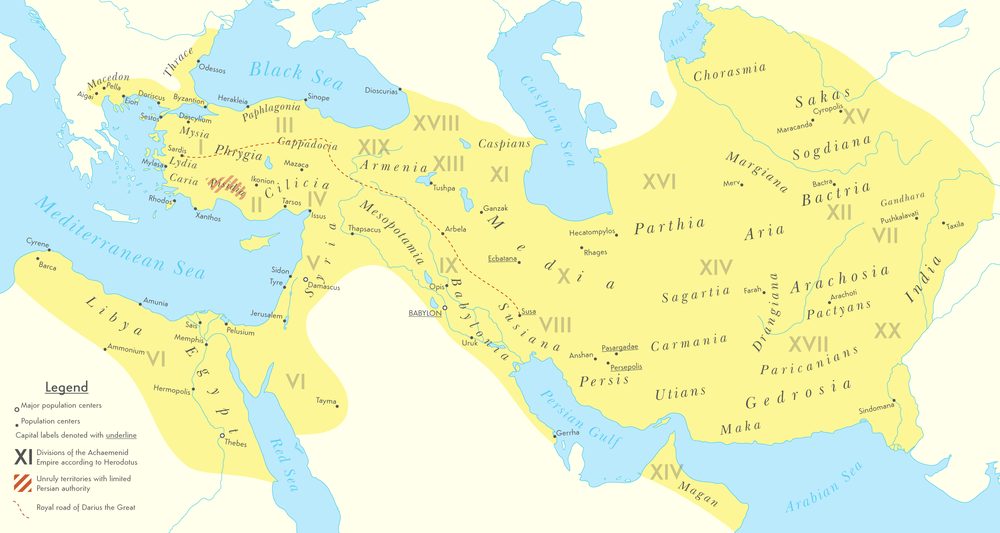
By the year 530 BC, Cyrus II of Persia — the man the Greeks would call Cyrus the Great, and the man the Hebrew prophets called the Lord's anointed — had assembled the largest empire the world had yet seen. He had begun, decades earlier, as the ruler of a minor kingdom in Anshan, a vassal of the Median king Astyages. By the time he was finished, he had overthrown his Median overlord, absorbed the wealthy Lydian kingdom of Croesus in the west, and in 539 BC walked into Babylon — the oldest and most prestigious city in the known world — almost without a fight. His domain stretched from the Aegean coast of Anatolia to the edge of the Indian frontier. What set Cyrus apart from the conquerors before him was not only the scale of his success but its apparent ease and its relative mercy. He returned exiled peoples to their homelands, restored temples, and ruled subject nations through their own institutions rather than grinding them into a single Persian mould. The famous clay cylinder bearing his name, unearthed in the ruins of Babylon, presents him as a restorer of order favoured by the gods. He was, by the standards of any age, an extraordinary man, and he knew it. He had never met a problem that could not be solved by force or by cunning, and usually he preferred the cunning. Our chief source for what happened next is the Greek historian Herodotus, writing around the middle of the fifth century BC, roughly three generations after the events. Herodotus himself admitted that several versions of Cyrus's death circulated in his day, and that he was choosing the one he found most credible. The account that follows is the most repeated and the most vivid; it should be read as the tradition the ancient world preserved rather than as a court record. Later writers — Ctesias, Berossus, Xenophon — gave Cyrus other, gentler deaths. Herodotus gave him the one that history remembered.
To the northeast of the Persian heartland, beyond the river the Greeks called the Araxes, lay a vast open country of grass and sky: the steppe of Central Asia. It was the home of the Massagetae, a confederation of nomadic horse peoples related to the Scythians, herders and raiders who reckoned their wealth in livestock and bronze and gold rather than in cities. They did not farm, they did not build walls, and they were, by every account, formidable in war. They fought on horseback and on foot, with bow and spear and battle-axe, and they did not frighten easily. At the time of Cyrus's campaign, the Massagetae were ruled by a widow. Her name, as Herodotus records it, was Tomyris. Her husband, the previous king, was dead, and she governed the confederation in her own right. To a Persian court accustomed to the careful protocols of monarchy, a queen of nomads may have seemed an easy mark — a throne held by a woman, over a people with no capital to besiege and no treasury to seize. Cyrus, casting about for the next conquest after Babylon, fixed his ambition on the lands beyond the river. He was an old man by now, and perhaps he wished to round off his life's work with one final addition to the map. His first approach was, in the manner of the age, a proposal of marriage. By the account that survives, Cyrus sent word that he wished to take Tomyris as his wife. She understood the offer for exactly what it was: not a courtship but an annexation, a bid to absorb her people through her bed rather than the battlefield. She refused him plainly. Cyrus, having tried the subtle road and found it closed, dropped the pretence and prepared for war. He marched his army to the Araxes and began building boat-bridges and pontoons to carry his host across into her country.
Tomyris sent a herald to him while the bridges were still being built, and her message was a model of cold reason. Rule your own people, she told him, and endure to see us ruling ours. But since she knew he would not take that advice, she offered him a soldier's choice. If he was determined to fight the Massagetae, he need not labour over his bridges. Let him withdraw a three days' march into his own territory, and she would cross the river and meet him there. Or, if he preferred to receive her on his side, let him withdraw the same distance and she would come to him. The offer was generous to the point of contempt — and Cyrus and his council of war debated which way to answer it. Most of his advisers favoured letting Tomyris cross into Persian land, so as to fight on home ground. But Croesus — the deposed Lydian king, now a captive counsellor in Cyrus's train — argued the opposite, and his reasoning carried the day. If Cyrus retreated and was beaten, Croesus warned, he would lose not just a battle but his whole empire at his back. Better to cross the river, advance into the enemy's country, and beat the Massagetae there. And Croesus added a stratagem. The nomads, he said, were poor and unused to the luxuries of Persia. Let Cyrus prepare a great feast in the camp — meat, bread, and above all abundant strong wine — then leave it lightly guarded and withdraw the bulk of the army. The Massagetae would fall upon the food and drink themselves senseless, and could be cut down as they slept. It was a clever plan, and it worked exactly as designed — which is precisely why it was unforgivable. Cyrus crossed the Araxes. He laid out the lavish camp and withdrew his weakest troops to hold it. A detachment of the Massagetae, commanded by Tomyris's son, a young man named Spargapises, attacked and overran the camp, killed the defenders, and then sat down to enjoy the spoils. They had never tasted wine. They gorged and drank until they collapsed, and Cyrus's main force returned and fell on them. Many were killed; many more were taken prisoner. Among the captives, drunk and disarmed, was the queen's son and heir.
What followed turns the episode from a clever ambush into a genuine grievance — the wrong that gives the story its weight. Tomyris, learning what had befallen her son and her army, sent Cyrus a message that Herodotus preserves in something close to its full fury. He had won nothing to be proud of, she told him. He had not beaten her people with the strength of his own arm but with the fruit of the vine, a poison that crept into men's bodies and floated foul words to the surface of their minds. It was by this trick, not by valour, that he had taken her child. Now she gave him counsel, and bade him take it: give her back her son, leave her country unpunished though he had outraged a third of the Massagetae's host, and depart. If he refused, she swore by the sun, the lord of the Massagetae, that for all he was insatiable of blood, she would give him his fill of it. Cyrus ignored her. Whether out of pride, or the conqueror's certainty that one more victory was assured, he made no move to release the boy. As for Spargapises himself, the prince woke from his drunken stupor in chains, understood what had happened, and was broken by the shame of it. When the wine had cleared from his head and he grasped the depth of his disgrace — a king's son and a war-leader, taken not in battle but face-down in a stolen feast — he asked Cyrus to free him from his bonds. The request was granted. The moment his hands were loose, Spargapises killed himself. The cheap trick that had captured him had now cost him his life, and it had cost Tomyris her son and her heir in a single stroke.
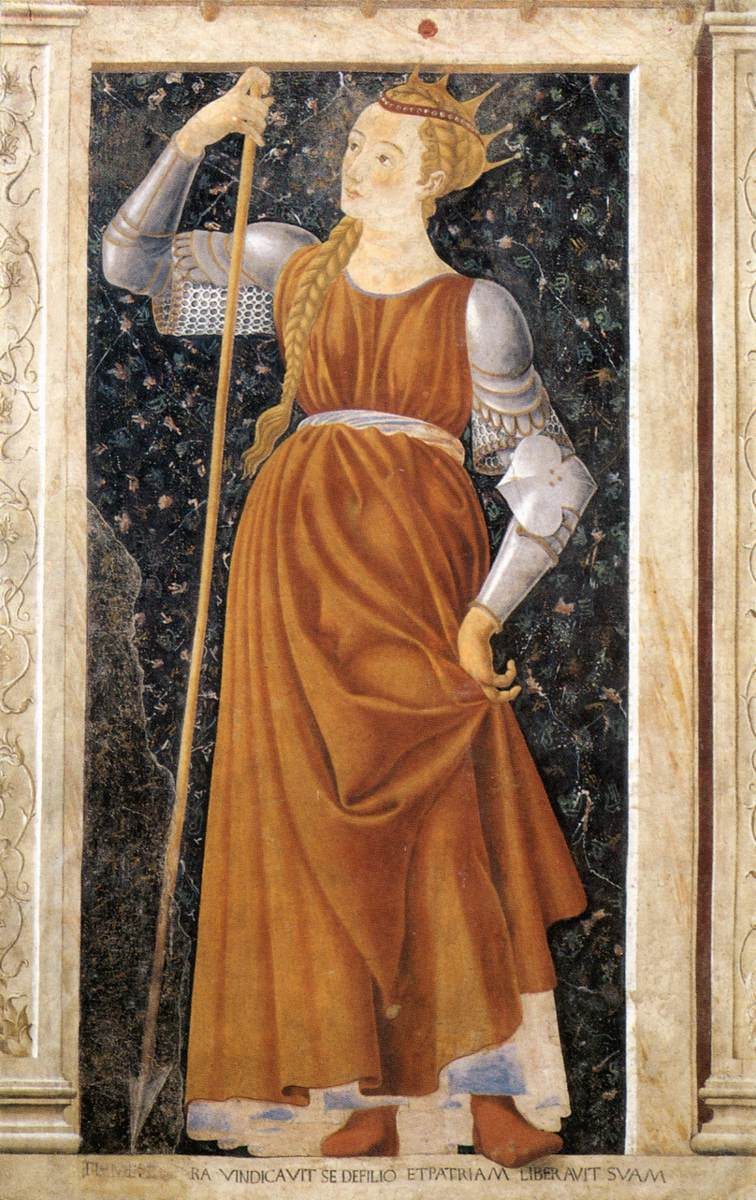
Tomyris had asked once. She did not ask again. She gathered the whole strength of the Massagetae — not the raiding party her son had led, but the full host of the confederation — and brought Cyrus to battle. Herodotus, who had seen and heard of many fights, called it the most violent of all the battles fought between peoples who were not Greek. By his account the two armies first stood off and emptied their quivers at one another, and then, when the arrows were spent, closed with spear and dagger and fought hand to hand, locked together and neither side willing to give ground or to flee. They fought, in the tradition Herodotus records, for a long time, and in the end the Massagetae had the better of it. The greater part of the Persian army was destroyed on the steppe. And Cyrus the Great — the man who had overthrown the Medes, humbled Lydia, and taken Babylon almost without bloodshed — fell there among his soldiers, killed in the slaughter after a reign of twenty-nine years. The conqueror who had outlived every enemy worth the name died in an open country with no walls, beaten by the nomads he had crossed a river to subdue. Then Tomyris kept the second half of her promise — the part that gave the whole episode its terrible symmetry. She had sworn to give the blood-glutton his fill of blood, and she meant it literally. By the account Herodotus preferred, she had her men search the heaps of the dead until they found Cyrus's body, and she had the head severed from it. Then she filled a wineskin — or by some tellings a vessel of human blood gathered from the field — and thrust the dead king's head down into it, so that he might drink his fill at last. As she did so she is said to have addressed the corpse: though she had come through the battle alive and victorious, he had destroyed her by the capture of her son, and so, as she had threatened, she gave him his fill of blood.
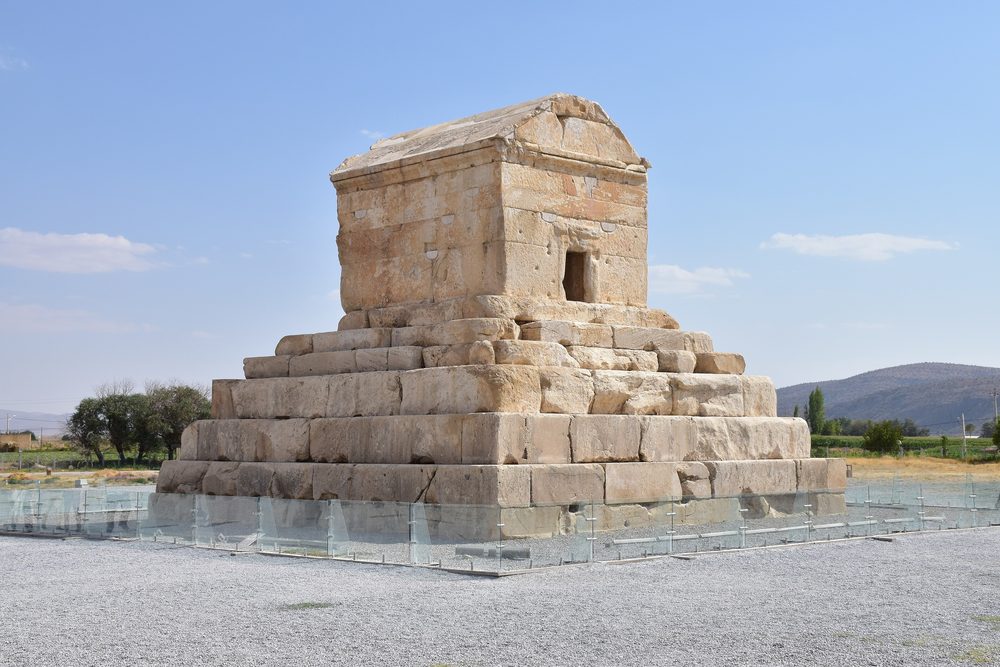
The immediate consequences were enormous and largely invisible to us, because the victors left no chronicles. The Persian invasion of the Massagetae simply ended; the empire's northeastern expansion stalled at the river it had tried to cross. The body of Cyrus, by the account of his desecration, never returned to his people whole — though here the sources fork sharply. The tomb of Cyrus still stands at Pasargadae in modern Iran, a simple gabled stone chamber on a stepped base, and it was venerated as his resting place for centuries; Alexander the Great is recorded as having visited and ordered it restored two hundred years later. How the conqueror's remains came to rest there, if Tomyris had truly carried off his head, the tradition does not trouble to reconcile. Tomyris herself vanishes from the record almost the moment the battle ends. She has no further story in Herodotus; she appears, takes her revenge, and is gone, like the steppe wind that carried her people. Her son was dead, her warning vindicated, her country left to itself. The Massagetae would trouble later Persian kings — it was against a related people, the Scythians, that Cyrus's successor Darius would launch his own difficult northern campaign a generation later — but Tomyris had made her single, total point. The price of taking her son by a trick was the life of the greatest king of the age and the head he could no longer hold up.
It is one of the ironies of history that we know Tomyris almost entirely through the pen of a culture not her own. The Massagetae wrote nothing down; everything we have comes through Greek and later Roman and Christian transmission. And yet she endured. The image of the warrior queen who avenged her son and humbled the conqueror of Babylon proved irresistible to the moralists of every later age. She became a stock figure of medieval and Renaissance art and literature — an exemplar, depending on the teller, of justice, of vengeance, of the dangers of pride, or of female fortitude. Painters from Rubens to Mattia Preti returned again and again to the grim scene of the queen and the severed head in the bowl of blood, and writers from Dante onward set her among the famous women of the past. For Cyrus, the story served a different purpose. The man whose life had been a near-unbroken procession of triumphs needed, in the moral imagination of the Greeks, a fall to match his rise — and his historians supplied one. There is something almost too neat in the shape Herodotus gives it: the conqueror warned and unheeding, the cunning that wins the skirmish and loses the war, the boast about blood answered with a bowl of it. Whether every detail is literally true matters less than what the ancients chose to remember. They remembered that the strongest king of the known world reached too far, took a queen's son by a trick instead of by valour, ignored a single clear warning, and paid for it on a nameless plain beyond a river he should never have crossed.
Image: Peter Paul Rubens, "The Head of Cyrus Brought to Queen Tomyris" (c. 1622–23). Public domain, via Wikimedia Commons.
He had humbled Babylon and toppled kings. He was undone by a nomad queen and one warning he was too certain to heed.

They killed her husband, then sent ambassadors to ask her to marry their prince. She welcomed them warmly — and erased their entire people in four escalating acts of horror.
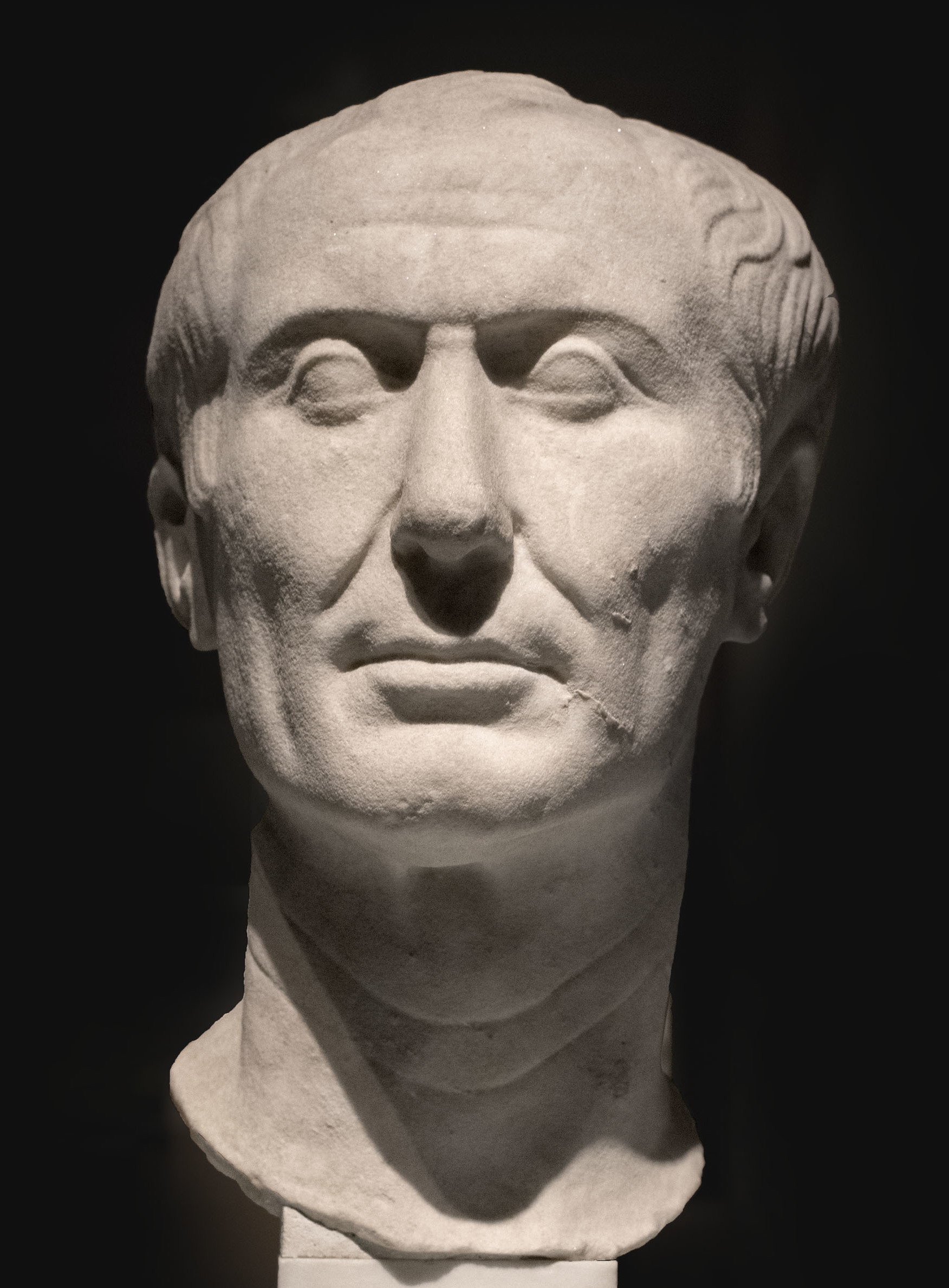
Kidnapped and held for ransom, the young Caesar told his captors exactly what he would do to them once freed. They thought it was a joke. It was not a joke.