
RevengeIdeas
Served Cold
Charles of Anjou bled Sicily white to pay for a war on Constantinople. On Easter Monday 1282 a single soldier's wandering hands set a church bell ringing — and the bell brought down his empire.
For thirty years the crown of Sicily had been a prize the papacy could not give away fast enough. The island and its mainland twin, the Kingdom of Naples, had belonged to the Hohenstaufen — the line of the Emperor Frederick II, the stupor mundi, whose long quarrel with Rome had outlived him. When his heirs proved as stubborn as the father, successive popes looked abroad for a champion who would unseat them. They found one in Charles, Count of Anjou and Provence, the youngest brother of King Louis IX of France: pious in the French royal manner, coldly able, and utterly without sentiment. Charles took the bargain in 1266. At Benevento that year he destroyed and killed Manfred, Frederick's illegitimate son, who had ruled Sicily well and was loved there. Two years later, at Tagliacozzo, he crushed the last Hohenstaufen heir, the sixteen-year-old Conradin, who had come south to reclaim his grandfather's throne. Charles took the boy prisoner and had him beheaded in the market square of Naples — an act that scandalised even an age long accustomed to dynastic murder. The kingdom was his now, won by the sword and blessed by the Church. What he chose to do with it would take fifteen years to come due.
Charles of Anjou did not regard Sicily as a home. He regarded it as a treasury and a barracks. He moved the seat of his government to Naples, on the mainland, and left the island to be administered — which is to say, drained — by French and Provencal officials who neither spoke the language nor troubled to learn the customs. Taxes rose and then rose again: the land tax, the hearth tax, forced requisitions of grain and horses, the billeting of foreign soldiers on a hostile people. All of it fell on Sicilians to fund a war that had nothing to do with them. For Charles's eyes were fixed far to the east. He meant to be more than a king of Sicily; he meant to take Constantinople, undo the Greek recovery of the city in 1261, and make himself the first prince of the Mediterranean. Sicily was the chest from which that dream would be paid for, and the fleet that would carry it was being built in Sicilian harbours with Sicilian money. The islanders watched their wealth sail away and their sons conscripted, and they remembered Manfred, and they remembered the boy beheaded at Naples. Resentment of this kind does not announce itself. The Frenchmen who garrisoned the towns swaggered as occupiers do; the tax-farmers squeezed; the courts spoke a foreign tongue and gave foreign verdicts. A people can carry a great deal of that for a long time, storing it up without quite knowing what it is storing it for. Sicily carried it for fifteen years.
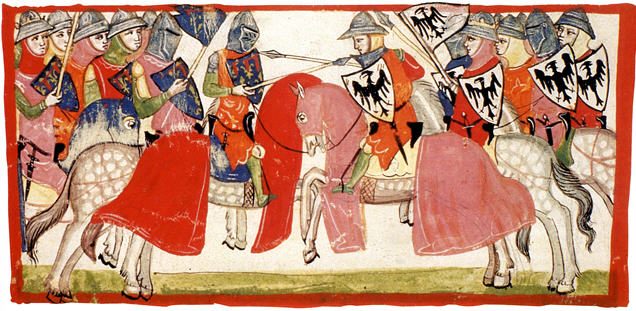
By the later accounts — many of them written long afterward, and not all to be trusted — the explosion of 1282 was no accident but the fruit of a conspiracy years in the making. The figure at its centre, in the tradition, is John of Procida, a Salernitan physician and diplomat who had served the Hohenstaufen and never forgiven their fall. He is said to have travelled in disguise between three courts that each had reason to want Charles humbled: Peter III of Aragon, whose wife Constance was Manfred's daughter and the last Hohenstaufen claimant; the Byzantine Emperor Michael VIII Palaiologos, whose city Charles intended to seize; and the disaffected nobles of Sicily itself. How much of this is history and how much is later romance remains disputed, and probably always will be. Michael VIII, for his part, wrote in his memoirs that he had been the instrument of God against Charles, and that the gold which armed the Sicilians had flowed from his treasury — a boast, perhaps, but a revealing one. What is certain is that by the spring of 1282 Charles's fleet lay almost ready at Messina, his great eastern war about to begin, and the island beneath him as dry as kindling. It wanted only a spark; and the spark, when it came, was small enough to be almost comic. There was, too, a simpler accelerant than any conspiracy. Charles had ordered a general muster of men and ships for the eastern war, and the island was crawling with soldiers and requisition officers gathering supplies by force. A people already resentful now found the very instruments of its resentment quartered in its streets, eating its grain and eyeing its women, on the eve of a campaign no Sicilian wished to pay for. Whether or not John of Procida ever knocked at a single door, the kingdom had been arranged, almost deliberately, into the shape of an explosion.
It fell on Easter Monday, the thirtieth of March 1282, at the church of Santo Spirito a little way beyond the walls of Palermo. The townspeople had gathered there in the cool of the evening for the holiday, waiting for the bells that would ring the hour of vespers. Among the crowd moved a party of French officials and soldiers, half-drunk and, in the manner of an occupying garrison on a feast day, looking for amusement. By the most repeated account, a sergeant named Drouet laid hands on a young married Sicilian woman, on the pretext of searching her for a concealed weapon, and was a good deal more thorough than the pretext required. Her husband drew a knife and killed him where he stood. The other Frenchmen rushed in; the Sicilians, who had been waiting fifteen years for an excuse, fell upon them. And at that exact moment the bells of Santo Spirito, and then of all Palermo, began to ring for vespers — so that the killing and the call to prayer became, ever after, the same sound. The crowd poured back through the gates crying death to the French, and the city rose. By the most repeated account the rioters tested the fleeing and the hidden by holding up chickpeas and demanding the word for them — ciciri, a soft Sicilian word the French tongue could not manage, so that a man might be condemned by his own accent. Through the night and into the next day some two thousand Frenchmen — soldiers, officials, merchants, their wives and children, and even the Sicilian women who had married them — were hunted through the streets and cut down. Friars who tried to shelter them were dragged off their charges.
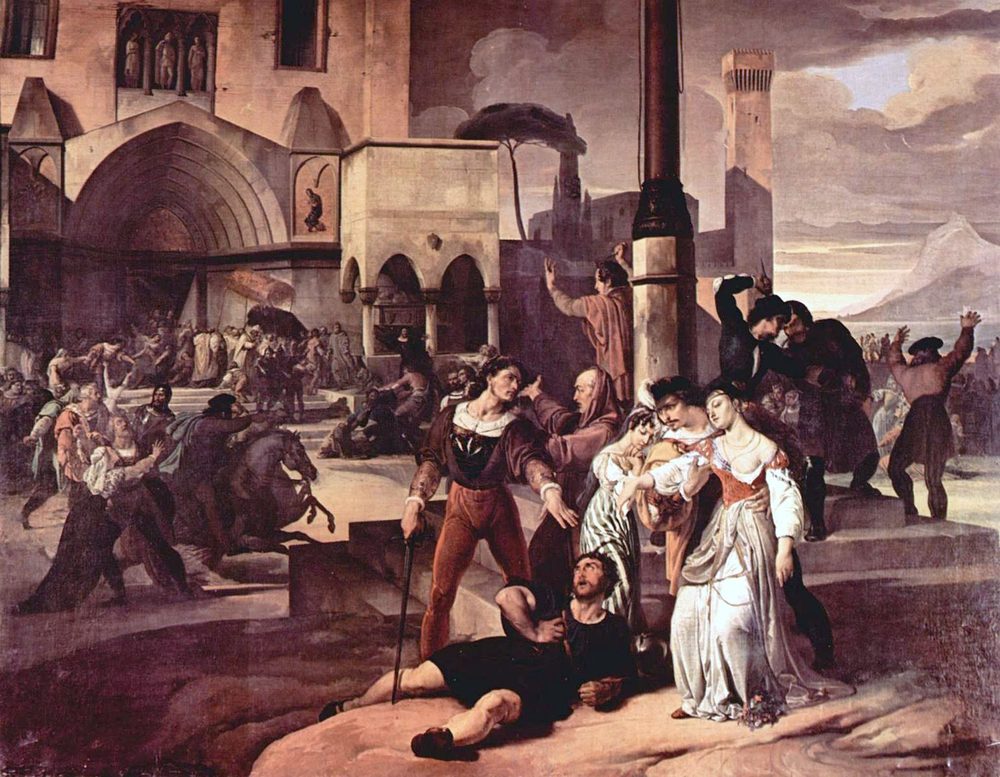
What began as a riot outside one church became, within weeks, a revolution. The news ran from town to town faster than any garrison could ready itself, and everywhere the answer was the same. Corleone rose, and the lesser towns between, and at last Messina, where Charles's fleet lay at anchor. The French were killed or expelled; their castles were besieged; the officials who fell into Sicilian hands were shown the mercy they had shown. In the space of about six weeks the Angevin administration of the island simply ceased to exist. The risen towns did not, at first, mean to trade one king for another. They declared themselves free communes under the protection of the Church, and sent envoys to Rome to lay the island at the feet of the Pope. It was a fatal miscalculation. The pope of the day, Martin IV, was himself a Frenchman and Charles of Anjou's creature; he refused the Sicilians outright, excommunicated the whole island, and ordered them to take their lawful lord back. Cut off from the protection they had counted on, with Charles already turning his interrupted fleet to come and punish them, the Sicilians did the one thing left to them. They offered their crown to a man who possessed both a claim and an army: Peter of Aragon. Messina was the hinge. The city had been among the last to rise and had the most to lose, for it was there that Charles's invasion fleet rode at anchor; and when the Messinese at last turned on their governor at the end of April they burned what they could of it and barred their gates. Charles brought his army across the strait that summer and laid siege to the city, and Messina held — its walls manned, by the chroniclers' account, as much by its women as its men — until the arrival of Peter of Aragon in the autumn forced the Angevins to abandon the siege and withdraw to the mainland. The blow that was meant to make an example of the rebels instead announced, to all of Italy, that Charles of Anjou could be beaten.
Peter III had been waiting, with a fleet conveniently already at sea, for precisely this invitation. His wife Constance was Manfred's daughter and the Hohenstaufen heiress, which lent the Sicilian offer the colour of legitimacy; his ambition supplied the rest. He landed at Trapani at the end of August 1282 and was crowned at Palermo, and what had begun as a popular rising became a war between crowns that would not end for twenty years. It went very badly for Charles of Anjou. His siege of Messina failed. His fleets were broken, again and again, by the Aragonese admiral Roger of Lauria, the finest sea-commander of the age, who at one point captured Charles's own son and heir. The great eastern war for Constantinople never sailed: the money and ships meant for it had been swallowed by the island that was supposed to pay for it. Charles raged and schemed — he even challenged Peter to a formal duel, which came to nothing — and died in 1285 with Sicily lost and his Mediterranean dream in ruins. The kingdom he had won whole was cut in two. The Angevins kept the mainland and the city of Naples; the Aragonese kept the island. The War of the Vespers dragged on through battles, truces and broken treaties until the Peace of Caltabellotta in 1302 at last confirmed the division. The thing was finished. It had cost Charles his fleet, his eastern empire, his heir's liberty and the better part of his house's fortune — and it had begun with a soldier, a woman and a chickpea.
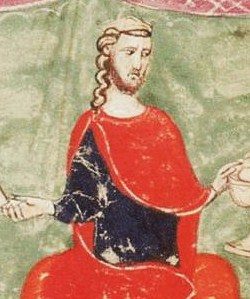
The centuries did not forget. The Sicilian Vespers passed into the languages of Europe as a name for a particular kind of event: a sudden, coordinated, popular massacre of an occupier, sprung as if at a single signal. Conspirators and demagogues of later ages would promise their followers a Sicilian Vespers, and their enemies would lie awake dreading one. In the nineteenth century Giuseppe Verdi made an opera of it, and the Italian Risorgimento, hungry for stories of Italians throwing out foreign masters, took the rising to its heart. Historians have argued ever since over how much of it was spontaneous and how much was planned — over John of Procida and the gold of Byzantium, and whether the woman at Santo Spirito ever existed at all. The argument is probably unanswerable, and in a sense beside the point. Whether the fuse was laid by patient conspirators or simply by fifteen years of taxes and contempt, the powder was real, and the whole of Europe heard it go off. Charles of Anjou had set out to be remembered as the man who reunited the Roman world beneath his own crown. He is remembered instead as the man it happened to — at vespers, on an Easter Monday, when the bells began to ring.
Image: Francesco Hayez, I Vespri Siciliani (1846). Public domain, via Wikimedia Commons.
He had meant to conquer an empire by Easter. The Sicilians unmade one in the time it takes to ring the bells for evening prayer.
They killed her husband, then sent ambassadors to ask her to marry their prince. She welcomed them warmly — and erased their entire people in four escalating acts of horror.
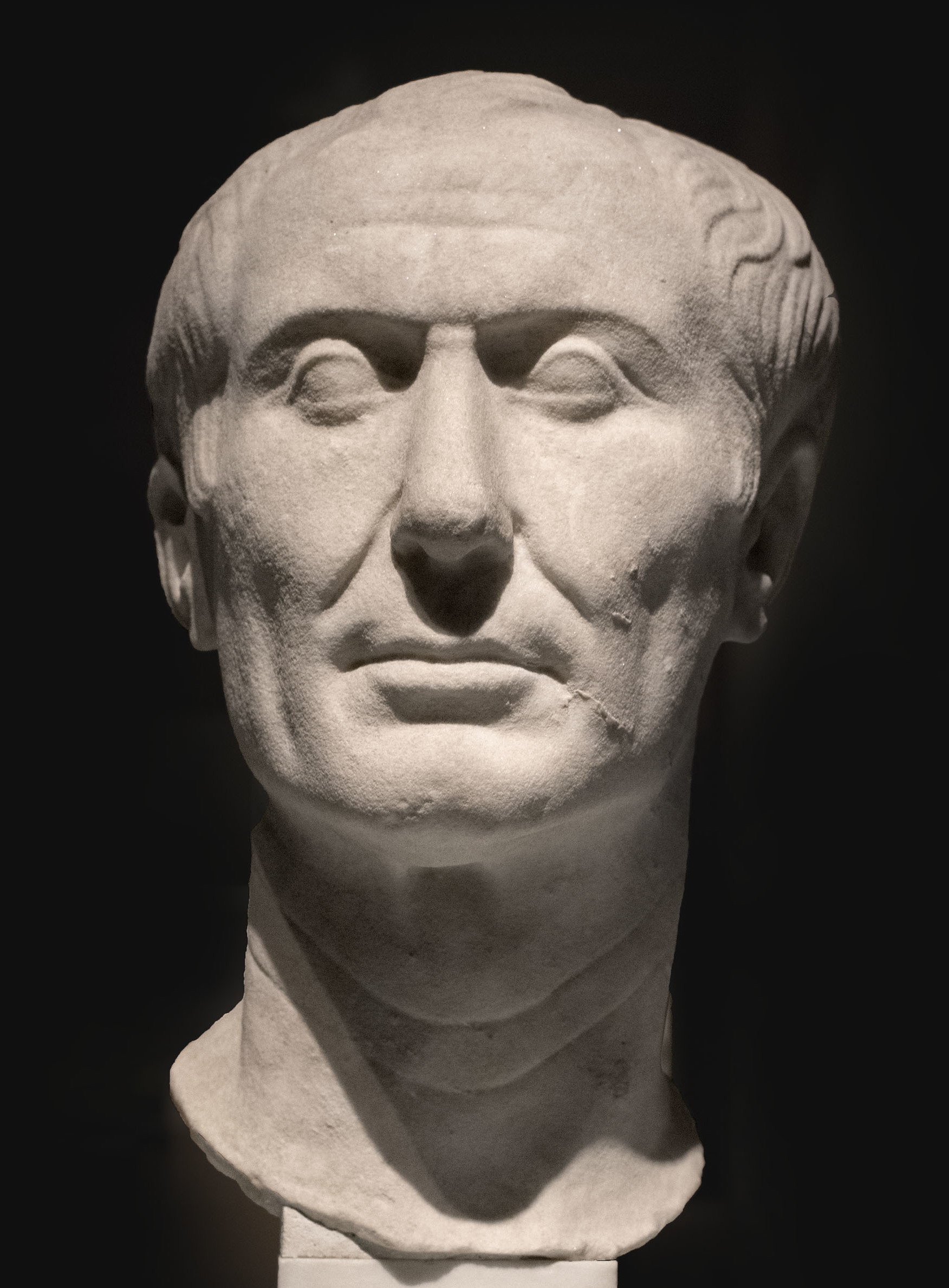
Kidnapped and held for ransom, the young Caesar told his captors exactly what he would do to them once freed. They thought it was a joke. It was not a joke.