
RevengeIdeas
Served Cold
They hacked his mother's household apart on the palace steps while the boy stood there holding her hand, and were handed the government as a reward. Sixteen years later Peter came home from Europe, fitted out fourteen rooms for interrogation, and settled the account in front of an invited audience.
Ivan the Terrible raised the streltsy — the shooters — around 1550: the first professional standing soldiers Russia kept. A hundred and thirty years later they were something their founder would not have recognised: twenty-two regiments of a thousand men each, quartered in Moscow itself, living with their families in their own suburbs and guarding the Kremlin gates. Service was hereditary and the pay poor, but the privileges were excellent: exemption from tax, the right to keep a shop, to brew and sell drink. The garrison had matured into a caste of armed tradesmen with property in the capital and a preference for staying near it. Their colonels used idle soldiers as an unpaid workforce and skimmed the payroll besides. That was the machine inside the walls in the spring of 1682: heavily armed, professionally aggrieved, and — because it guarded the palace — perfectly placed to decide who ruled Russia. In April a regiment petitioned against its colonel; the man who carried the paper was taken out to be flogged and his comrades took him back off the whipping post. Seventeen regiments were in open mutiny within days, and it was obvious somebody was going to use them.
Tsar Feodor III died on 27 April 1682, twenty and childless. His full brother Ivan, fifteen, half-blind and slow of speech, was a Miloslavsky; Peter, nine, was a Naryshkin, large and alarmingly healthy. The court proclaimed Peter tsar that same day, which settled nothing, and Feodor's sister Sophia Alekseyevna, twenty-four, understood exactly what mutinous regiments were for. On 15 May two horsemen rode into the streltsy quarter shouting that the Naryshkins had murdered the Tsarevich Ivan. Bells rang, drums beat, and the regiments came up through the Kremlin gates with pikes and muskets. Nobody shut the gates. Peter's mother, the dowager Tsaritsa Natalya, walked out onto the Red Staircase holding both boys by the hand. Ivan, prompted, told the crowd that nobody was harming him. Peter, two weeks short of his tenth birthday, said nothing, and those who were there remembered he did not flinch. They had brought the child out as evidence, and the evidence watched. Prince Mikhail Dolgoruky, son of the corps' commander, made the error of shouting at them to go home or take the knout. They pitched him over the balustrade onto the pikes held up below. Artamon Matveev, the statesman who had raised Natalya, stood at her elbow; they tore him from her hands and threw him after Dolgoruky. Then they went inside for the rest, pushing pikes under beds and behind altars; Peter's uncle Afanasy Naryshkin was dragged from behind an altar and cut to pieces, and Prince Grigory Romodanovsky, the veteran southern commander, was killed by the mob the same day. Two days later they demanded Afanasy's brother Ivan; Sophia told Natalya the family would not die for one man, and Natalya handed him over. He was tortured for a confession he never gave and hacked apart on the seventeenth. The killing ran on to the eighteenth: the court physician Daniel von Gaden, accused of poisoning Feodor, was hunted down and killed among the last of them. The bodies went to Red Square, and the streltsy announced each corpse by its title and rank as it was dragged past, making way politely.
The settlement was dictated by the men with the pikes: Ivan senior tsar, Peter junior, Sophia regent. What was left of the Naryshkin party withdrew to Preobrazhenskoe, a royal village outside Moscow, where Peter went almost entirely unsupervised for seven years — the most consequential thing Sophia's regency ever did. He played soldiers. The play companies, the poteshnye, began with noble boys and grew to take in the sons of grooms and serfs; Peter enrolled as a drummer and let other men hold the commissions. The instructors came from the foreigners' quarter across the river — the Scottish general Patrick Gordon, the Genevan adventurer Franz Lefort — and the games hardened into the Preobrazhensky and Semyonovsky Guards, the senior regiments of the Russian army until 1917. The reckoning with Sophia, in August 1689, cost almost nothing. A rumour of an attack put the seventeen-year-old Peter on a horse in his nightshirt, riding for the Trinity monastery forty-five miles away, and from there he summoned people. They came — the patriarch, Gordon with the foreign officers, then the streltsy colonels — until Sophia sat in the Kremlin with nobody left. Shaklovity was beheaded, Golitsyn exiled to the Arctic, Sophia put into the Novodevichy Convent. Peter did not touch the streltsy. He used them at Azov in 1696, and in March 1697 left Russia with the Grand Embassy, travelling as Pyotr Mikhailov to learn shipbuilding in Amsterdam and at Deptford. The capital was left to look after itself.
The men who mutinied in 1698 were not the men who had killed Matveev. After Azov, four Moscow regiments were not sent home but posted to Velikiye Luki on the Polish frontier — garrison duty far from wives and workshops, short of food and pay, with no visible end. In March 1698 a hundred and seventy-five walked off to petition in Moscow, were ordered out, and went back with the news that the capital was empty, the tsar abroad among foreigners and Sophia still alive in her convent. On 6 June some 2,300 men put their officers out, elected representatives from the ranks and started for Moscow, a rumour running through the column that Peter had died abroad or been swapped for a German. They got forty kilometres. Aleksei Shein and Patrick Gordon intercepted them on 18 June at the Voskresensky Monastery on the Istra with four thousand men and twenty-five guns. Gordon spent most of the day trying to talk them into surrender; when that failed the artillery opened and the affair lasted about an hour. The streltsy never brought their own guns into action. Shein hanged some fifty ringleaders in the week that followed, flogged and exiled the rest, and reported the matter closed.
Peter had the news in Vienna, packing for Italy. He cancelled Venice. Word that the revolt was already over — beaten in an hour, its ringleaders hanged — caught him on the road home through Poland, and he came on at speed anyway, in a temper that Johann Georg Korb, secretary to the Austrian legation, called a mind panting for vengeance. Peter did not want to know who had marched; he wanted to know who had written to them. He reached Moscow on 25 August 1698, did not go to the Kremlin but out to Preobrazhenskoe, where fourteen rooms were fitted out for interrogation and seventeen hundred prisoners fetched back from the monasteries Shein had parked them in. The instruments were the ordinary ones of Muscovite justice on an extraordinary scale: the batog, the knout — which could cut to bone in a dozen strokes — and fire. Men who fainted were revived by physicians so the session could go on. Prince Fyodor Romodanovsky ran the work; his great-uncle Grigory had been cut down in the palace on the first day of the 1682 revolt. The questions never varied. Who sent you. Did the Tsarevna know. One prisoner said under the knout that two letters from Sophia had reached the camp inside loaves of bread; no letter was ever produced. Peter rode out to Novodevichy and questioned her himself. She denied writing anything, and is said to have observed that the streltsy hardly needed a letter to remind them she had governed Russia for seven years — less a denial than a correction. He never found the conspiracy he had come home for, and proceeded on the assumption that it was there.
The executions began on 10 October 1698 at Preobrazhenskoe, behind the barracks, with the foreign ambassadors invited. The condemned came out in small carts — two to a cart and back to back, by the most repeated account, though Korb counted one man to each — every one holding a lighted candle, their wives and mothers walking behind the wheels. Korb saw a hundred loaded up at once. That morning a German major came back to him with the story that five rebel heads had been cut off by an axe swung by the noblest arm in all Muscovy. On the eleventh a hundred and forty-four were hanged in Red Square and a hundred and nine beheaded over an open trench back at Preobrazhenskoe. Then the arrangement turned deliberate. A quadrangle of gibbets went up beside the Novodevichy Convent, and by the most repeated account some two hundred men were hanged there over several days; Korb, who saw it, counted thirty gibbets and two hundred and thirty men on them. Three hung outside the window of Sophia's cell, a sheet of paper — a petition to her, in the official telling — pushed into each man's dead hands. The bodies were left up into the following spring, which was the point. Korb's summary is the line everyone quotes: the whole of October was spent butchering the backs of the culprits with knout and with flames … no day were those left alive exempt from scourging or scorching, or else they were broken upon the wheel, or driven to the gibbet, or slain with the axe. How much of it the tsar did himself was argued over from the start. The five heads came to Korb at second hand, from a man who claimed to have watched; Soloviev, working from the Russian records, accepted it, and it is now generally repeated as fact. What Korb saw himself was Peter's insistence that the work be shared: on 23 October he ordered his boyars to take up the axe, and they made a horror of it — one struck his man across the middle of the back and nearly cut him in two. What nobody disputes is that Peter stood there while it was counted.
The reckoning from September 1698 to February 1699 came to 1,182 streltsy executed and 601 flogged, branded and exiled, the youngest branded on the cheek and sent to Siberia instead of the rope. Sophia, never convicted of anything, took the veil as the nun Susanna and was kept behind a hundred soldiers at Novodevichy until her death in 1704. The Moscow regiments were broken up the following spring, their men demoted to ordinary soldiers, their families pushed out of the capital and their property sold off. The corps as a political body was finished — though after Narva in 1700 Peter quietly took the best of the survivors back into the line, and the last streltsy units were not wound up until the 1720s. A caste of armed shopkeepers had handed Peter the argument for a professional standing army, and he spent twenty years building one. He went after the beards as well. On the day after his return, before any of the killing began, Peter produced a razor and shaved the boyars who came to welcome him. A decree followed, and from 1705 a graduated beard tax — a hundred roubles a year from a rich merchant, two half-kopeks from a peasant at a town gate — with a copper token as proof. The Orthodox held that shaving the beard defaced the image of God, which was close to the point: the reign that hanged the old army from the Kremlin wall also shaved the old Russia off its face, and in 1703 began building its capital somewhere else.
Vasily Surikov worked three years on The Morning of the Streltsy Execution and finished it in 1881, a canvas nearly four metres wide. There is no execution in it. It is Red Square at dawn, mud and cart ruts, Saint Basil's crowding the left edge and the Kremlin wall closing the right; the condemned sit in their carts in white shirts holding lit candles, their families collapsed around them, and Peter sits a horse in a foreign coat off to the right, staring at one bearded man who stares back. Nobody has died yet. The restraint was deliberate and it cost him something. Ilya Repin told him the picture needed a body, and Surikov did paint a hanged man in — X-rays later showed hanged figures in an earlier state of the right-hand side as well — then took him out again, decided, it is said, by an elderly woman of the household who fainted at the sight of the noose. His own explanation was simpler: he wanted the solemnity of the last minutes, not the execution. He had read Korb's diary while he worked. Tretyakov bought it out of the ninth Wanderers' exhibition; it hangs in his gallery still. What Russia has argued about since is that stare between the soldier and the tsar, because it can be read either way — and Peter's reputation rests on the same unsettled transaction, that a modern Russian state was worth the men it was built over. What is beyond argument is that he got his answer for the Red Staircase — sixteen years late, and collected from the sons and grandsons of the men who had earned it, which is how these accounts generally settle.
Image: Vasily Surikov, The Morning of the Streltsy Execution (1881). Public domain, via Wikimedia Commons.
The streltsy taught a nine-year-old exactly what a crowd can do to a family. He turned out to be an attentive student.
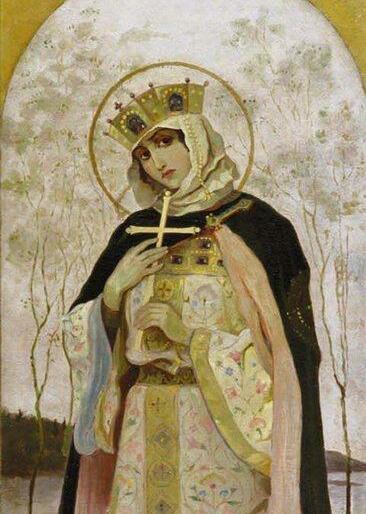
They killed her husband, then sent ambassadors to ask her to marry their prince. She welcomed them warmly — and erased their entire people in four escalating acts of horror.
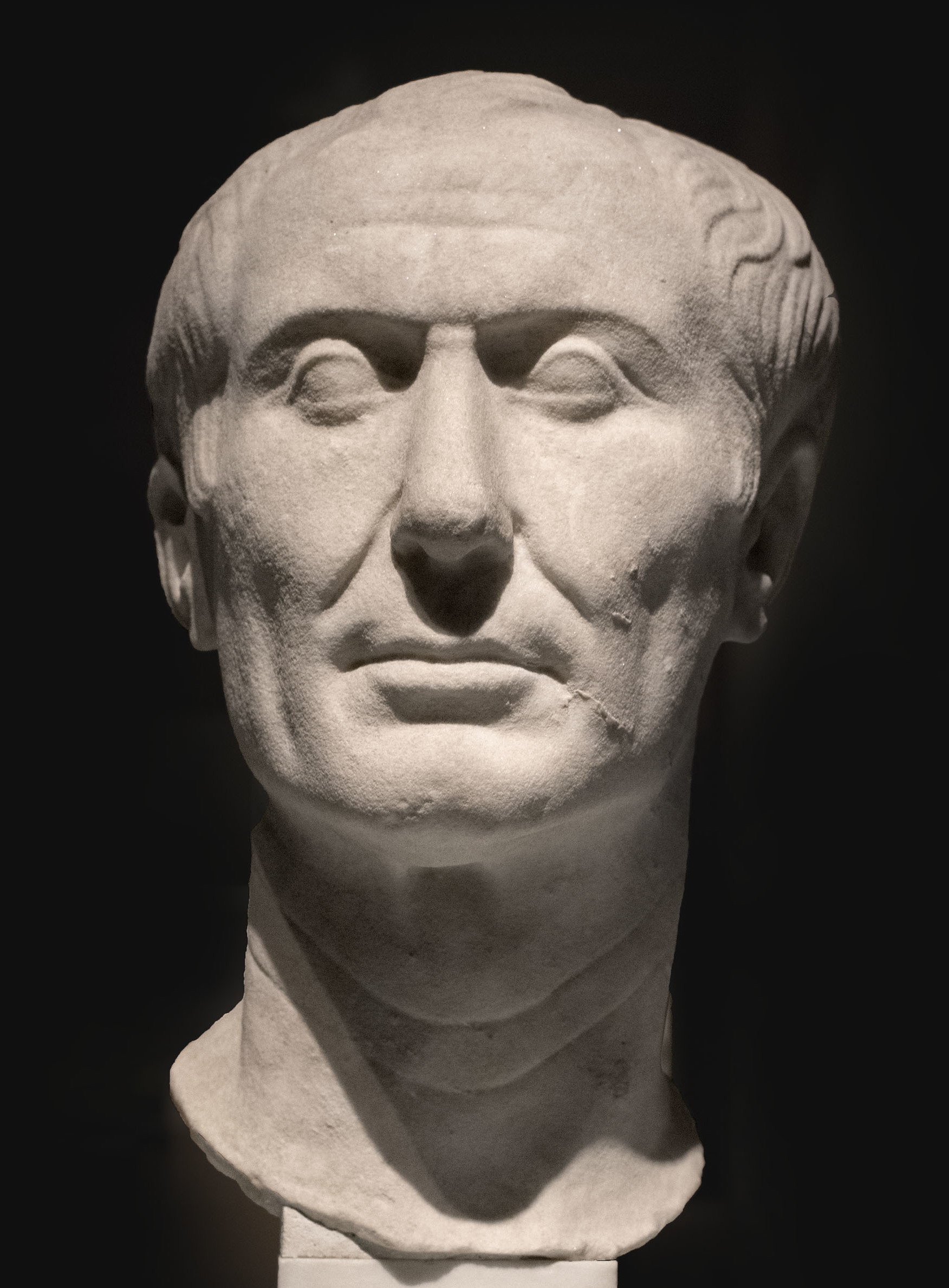
Kidnapped and held for ransom, the young Caesar told his captors exactly what he would do to them once freed. They thought it was a joke. It was not a joke.