
RevengeIdeas
Served Cold
The conspirators chose High Mass in the cathedral, reasoning that the one place Lorenzo de' Medici would stand unarmed was in front of God. They got his brother. Florence answered before sunset, and Lorenzo spent the next two years making the answer permanent.
Florence in 1478 was a republic the way a stage set is a building. The councils met, the offices rotated, the rhetoric of liberty was polished and sincere — and nearly every lever that mattered ran back to a bank on the Via Larga and to the twenty-nine-year-old who sat at the top of it. Lorenzo de' Medici held no title and needed none. His grandfather Cosimo had perfected the method: fund the state, staff the committees, marry the daughters well, and let other men enjoy the ceremony. Lorenzo added his own gloss — poet, patron, collector of artists and philosophers — and shared the position with his younger brother Giuliano, twenty-five, the beautiful one, the jousting champion the city half-worshipped. The arrangement worked because Florence prospered under it, and it galled because prosperity is not the same thing as consent. The Pazzi were everything the Medici were not: genuinely ancient, crusader pedigree, a name so old that a Pazzi ancestor was said to have been first over the walls of Jerusalem in 1099. They were also bankers, rich and rising, and they had watched a family of upstart wool merchants govern their city for three generations. Jacopo de' Pazzi, the ageing head of the house, was cautious. His nephew Francesco, manager of the Pazzi bank in Rome, was not. Francesco had the temperament of a struck match, and in Rome he found no shortage of men happy to supply the powder.
The conspiracy was assembled less by the Pazzi than by the men Lorenzo had spent a decade offending. Pope Sixtus IV wanted to buy the town of Imola as a fief for his nephew Girolamo Riario — one of a brood of nephews he was installing across Italy with an openness that scandalised even Renaissance Rome. Lorenzo, who wanted Imola for Florence, refused to lend the purchase money. The Pazzi bank lent it instead. Sixtus rewarded them with the papal account, stripping the Medici of the most profitable ledger in Christendom, and Lorenzo answered inside Florence with a law that conveniently disrupted a Pazzi inheritance. Each blow was legal, deniable, and perfectly understood by everyone involved. Then there was Francesco Salviati, whom Sixtus named Archbishop of Pisa over Lorenzo's objection — Pisa being Florentine territory, and consultation being the custom. Lorenzo barred him from setting foot in his own see for three years. Timing supplied the final push. In December 1476 Lorenzo's staunchest ally, Duke Galeazzo Maria Sforza of Milan, was himself assassinated — stabbed on a church porch, as it happened — leaving Milan governed by regents for a child and Florence, for the first time in Lorenzo's rule, without a protector who could put an army in the field quickly. To men in Rome doing the arithmetic of Italian power, the Medici suddenly looked mortal. By 1477 the injured parties had found one another: Riario supplying ambition, Salviati supplying fury, Francesco de' Pazzi supplying the family name, and the Pope supplying a blessing of magnificent elasticity. Sixtus told the plotters, by the most repeated account, that he desired a change of government in Florence but would sanction no killing — and then commended them to proceed, knowing precisely what proceeding meant. The soldier hired to lead the attack, the condottiere Giovan Battista da Montesecco, heard the Pope say it and later wrote it all down, which would matter a great deal to history and nothing at all to Lorenzo's brother.
The plan required both brothers dead in the same hour; a surviving Medici was understood by everyone to be a loaded weapon. After a series of missed opportunities, the conspirators settled on Sunday, 26 April 1478 — High Mass in the cathedral of Santa Maria del Fiore, with the signal to strike, by the most repeated account, the ringing of the sanctuary bell at the Elevation of the Host. It was this choice that broke the plot's one professional. Montesecco refused to add murder in a church to murder, and his place was taken by two priests, Antonio Maffei and Stefano da Bagnone — men, a contemporary observed, whose familiarity with holy ground left them less troubled by the setting. At the bell, Bernardo Bandini Baroncelli and Francesco de' Pazzi fell on Giuliano near the choir. Bandini's first blow split his skull; the two of them went on to stab him nineteen times, Francesco slashing in such a frenzy that he drove his own dagger through his thigh. Giuliano died on the cathedral floor. The priests assigned to Lorenzo managed only a cut to his neck. He spun out of their reach, cloak wound round one arm as a shield, sword out, vaulted the low choir rail and ran for the bronze doors of the sacristy while his friends closed behind him — one of them, the banker Francesco Nori, taking Bandini's blade to the stomach and dying for the interruption. The doors slammed. The humanist Angelo Poliziano, inside with the Medici party, sucked at Lorenzo's wound in case the blades had been poisoned. Outside, in a cathedral full of screaming worshippers, the conspiracy had achieved half its arithmetic — the fatal half to leave undone.
The second act collapsed faster than the first. Archbishop Salviati led an armed party to seize the Palazzo della Signoria, the seat of government, and talked his way in to see the gonfaloniere, Cesare Petrucci. Petrucci took one look at the archbishop's stammering performance, bellowed for the guard, and had him seized; part of Salviati's escort had helpfully shut themselves inside a chamber whose doors could not be opened from within — a detail of Florentine carpentry the conspiracy had not researched. Old Jacopo de' Pazzi, committed at last, rode into the Piazza della Signoria with a hundred hired men crying 'Popolo e libertà!' — people and liberty, the ancient formula for rising against a tyrant. The piazza answered with 'Palle! Palle!' — the balls of the Medici arms. Whatever Florence privately thought of Medici rule, it had just watched its cathedral turned into a slaughterhouse at Easter, and it took that personally. The vote of the street came back in Lorenzo's favour within the hour, and it was counted in bodies. By evening Francesco de' Pazzi, dragged naked and bleeding from his uncle's palace, was hanging from a window of the Signoria. Archbishop Salviati, still in his robes, was hanged from the next window over; Poliziano, who walked through the piazza and wrote down what he saw, records that in his last convulsions the archbishop fixed his teeth in the corpse beside him. Roughly eighty men were dead within days — hanged, cut down by the mob, or thrown living from the palace windows, the conspiracy's foot-soldiers dying considerably harder than most of its authors had planned to.
What separates the Pazzi affair from an ordinary reprisal is what Lorenzo did once the mob had finished. The revenge became administrative. Montesecco, captured, gave the confession that named the Pope before he was granted a soldier's beheading. The two priests were taken from sanctuary and hanged — after, contemporary accounts insist, being castrated first. Jacopo de' Pazzi was caught in the Apennines, brought back, tortured, and hanged from the same window as his nephew. Even then Florence was not done with him. Buried at Santa Croce, he was dug up when the priors decided a traitor polluted holy ground; reburied outside the walls, he was dug up again by a gang of boys who dragged the corpse through the streets, propped it upright at the door of the Pazzi palace to 'knock' with its own severed head — and finally pitched it into the Arno, singing as it went. The family itself was abolished by statute. The Pazzi name was banned; surviving males were imprisoned or exiled and stripped of office forever; whoever married a Pazzi woman was barred from public life. The dolphin arms were chiselled off every building that bore them, the street bearing the name was renamed, and every civic record was combed for the word Pazzi so it could be struck. Botticelli was commissioned to paint the hanged conspirators, life-size and dangling, on the wall beside the Palazzo Vecchio, with mocking verses — attributed to Lorenzo himself — beneath each figure. Bandini, who had escaped all the way to Constantinople, discovered the reach of a Medici ledger: Sultan Mehmed II, who valued Florentine trade, sent him back in chains. He was hanged in December 1479 in his Turkish clothes, and a young Leonardo da Vinci sketched the swinging corpse, noting the colours of the coat and cap with the detachment of a man recording drapery.
Sixtus IV responded to the hanging of an archbishop with the fury of a man whose plot had failed and whose fingerprints were on it. He excommunicated Lorenzo — for the crime, as it was drily observed, of surviving — placed all Florence under interdict when the city declined to surrender him, and launched a war against the republic in alliance with King Ferrante of Naples. Two years of raiding and expensive stalemate followed, and by late 1480 Florence was tired, broke, and beginning to wonder what its first citizen's quarrel was costing it. What Lorenzo did next turned a revenge story into a legend. In December he sailed, almost alone and without safe-conduct, to Naples — placing himself in the hands of Ferrante, a king whose reputation for hospitality included keeping enemies' bodies, by the most repeated account, where he could visit them. It was the gamble of a banker who had priced the table. Ferrante had little appetite for strengthening the Pope, and a guest this famous was worth more alive as a negotiating partner than dead as a favour to Rome. After ten weeks of negotiation Lorenzo came home with a peace treaty, and Florence received him as the man who had walked into the lion's house and invoiced the lion. The interdict sputtered on until the Turks landed at Otranto in southern Italy that summer, at which point Sixtus abruptly needed Christian unity and absolved everyone. The conspiracy's last author had, in effect, dropped the case.
The Pazzi plot had set out to destroy Medici power and delivered the opposite. Giuliano's murder gave Lorenzo something no banker could purchase: martyrdom in the family, and a city-wide licence for whatever he judged necessary. He emerged from the affair with his enemies dead, dispersed or absolved into irrelevance, his position hardened from first citizen into something no one bothered to disguise, and the acclamation of il Magnifico. He governed Florence's golden age for another fourteen years, patron of Botticelli and the young Michelangelo, and died in his bed in 1492 — a luxury he had personally ensured very few of the men from the cathedral enjoyed. The aftershocks ran further than anyone in the piazza could have guessed. A month after the murder, Giuliano's illegitimate son was born; Lorenzo took the boy in and raised him as his own, and the orphan of the Pazzi conspiracy grew up to become Pope Clement VII — the papacy the plot had been run from, occupied two generations later by its victim's son. Botticelli's mural of the hanged men stayed on the wall for sixteen years as civic wallpaper, scraped off only when the Medici were themselves briefly expelled in 1494. The Pazzi eventually crept back into Florence, their statutes softened by time. But history had taken its side. Half a millennium later, the family that predated the Medici by centuries is remembered for one Sunday in April — as the answer to the question of what, exactly, it was mad enough to try.
Image: Sandro Botticelli, Giuliano de' Medici (c. 1478). Public domain, via Wikimedia Commons.
Kill a banker's brother and the account does not close. It compounds.
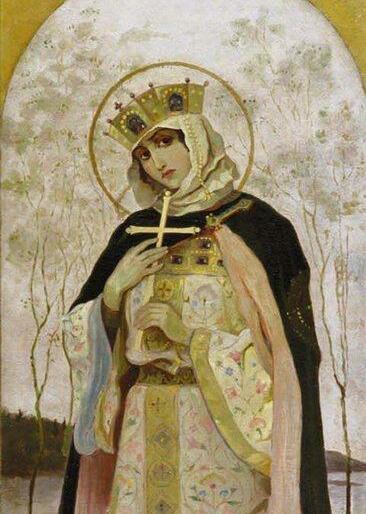
They killed her husband, then sent ambassadors to ask her to marry their prince. She welcomed them warmly — and erased their entire people in four escalating acts of horror.
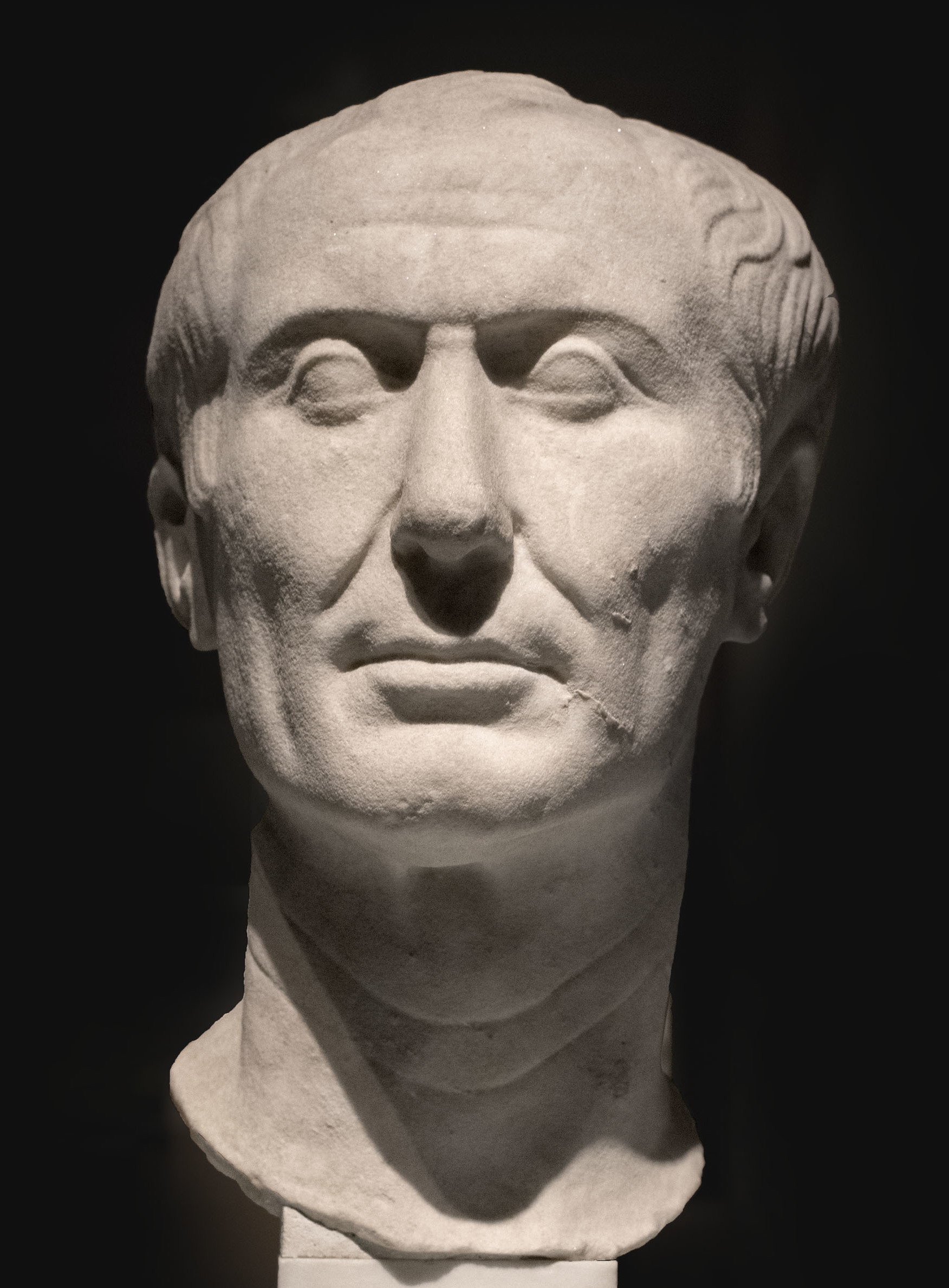
Kidnapped and held for ransom, the young Caesar told his captors exactly what he would do to them once freed. They thought it was a joke. It was not a joke.