
RevengeIdeas
Served Cold
Cyrus died trying to take his brother's throne. His mother could not bring him back, so she settled for the men who claimed the credit.
Among the children of Darius II and Parysatis, two sons stood at the centre of a succession dispute. Artaxerxes was the elder; Cyrus, whom his mother favoured, was younger. Parysatis argued that Cyrus had been born after Darius became king, while Artaxerxes had been born before, and that the younger son therefore had the stronger claim. It was an argument, not a rule that settled the issue. When Darius died in 405 or 404 BC, the elder son succeeded as Artaxerxes II. Cyrus retained his command in western Asia Minor, where he had already governed Lydia and directed royal forces near the Aegean coast. The king's wife, Stateira, made the family division sharper. Plutarch says that before his accession Artaxerxes had pleaded with Parysatis to spare her, after Darius had wanted her killed along with her brother. In his account, the king kept his wife and his mother remained devoted to Cyrus. Those personal loyalties mattered because both women had access to the reigning king. Neither was an observer waiting outside the doors of power. Parysatis had wealth of her own, and Plutarch credits her with helping Cyrus while he gathered the resources for a challenge to his brother. The first crisis came at Artaxerxes' royal initiation at Pasargadae. Cyrus was accused of intending to attack him there; Plutarch records incompatible versions of the accusation and does not resolve whether Cyrus actually entered the sanctuary to do it. Parysatis intervened, and the king spared Cyrus and sent him back to his western command. Xenophon also records the arrest and the mother's intervention. The pardon saved one son from execution by the other, but it did not restore trust. Within a few years Cyrus would return with an army, seeking the throne his mother had wanted for him.
In the west Cyrus recruited Greek soldiers through several commanders, while presenting his preparations as a dispute with the satrap Tissaphernes and, later, as a campaign against the Pisidians. Xenophon describes the recruiting and the march; he took part in the expedition and later wrote its best-known surviving account. Plutarch adds that Parysatis, still at court, tried to quiet the king's suspicions and could draw upon her own money. The sources let us see her support for Cyrus, though they do not provide an account of every payment or message that passed between them. In the spring of 401 BC the force set out from Sardis and advanced through Anatolia and into Mesopotamia. Its Greek contingents included more than ten thousand armed men, but ancient estimates for the much larger forces on either side of the coming battle are unreliable. As the march went on, the Greeks learned that their employer's destination was Artaxerxes, not a local enemy. Cyrus promised better pay to keep them moving. His aim was direct: he needed to remove his brother if he meant to become king. Artaxerxes had warning and assembled an army to meet him. They fought near Cunaxa, north of Babylon, in 401 BC. Cyrus placed the Greek troops on the right, beside the Euphrates, and his own cavalry near the centre. He wanted the Greeks to turn against the king's position. Their commander Clearchus kept his wing close to the river instead. The Greeks drove the troops opposite them away, but their success carried them farther from the decisive encounter. Cyrus then charged toward Artaxerxes with his horsemen. The king survived the meeting; Cyrus did not. Xenophon's Greeks had won their part of the field and lost the man whose claim gave their campaign its purpose.
Who struck Cyrus became a matter of dangerous importance at court. Xenophon says Cyrus charged and struck the king, citing Ctesias for the wound through the royal breastplate. He reports that an unidentified attacker then hit Cyrus below the eye and that eight of his companions fell with him. Xenophon offers little more about the killer. Plutarch, writing much later, sets different traditions beside one another. In the version he attributes to Dinon, Artaxerxes and his attendants struck Cyrus during repeated charges. Another account gave the decisive blow to a Carian. Plutarch then tells the much longer story of Ctesias, the Greek physician attached to the royal household. In that telling, a young Persian named Mithridates struck Cyrus near the temple with a spear without recognising him. Cyrus fell, recovered enough to be led away, and was then struck from behind by one of the men from Caunus accompanying the royal army. He fell again, hit his injured head on a stone and died. This is a sequence of reported claims, not an established reconstruction of the last minutes. Even Plutarch remarks on how long Ctesias takes to finish killing Cyrus. The physician had been at the battle and treated the wounded king, but that did not make him an eyewitness to every movement around Cyrus. After the body was identified, Plutarch says that its head and right hand were cut off and that Artaxerxes displayed the head to steady men who still feared defeat. He later names Masabates, one of the king's eunuchs, as the man who had done the cutting. In Plutarch's account, Artaxerxes wanted it believed that he had personally killed his brother. He gave Mithridates gifts while presenting them as a reward for finding Cyrus' horse trappings. The king offered a Carian a lesser explanation for his reward: he had brought news of the death. The official version made its own dangers for anyone who claimed a different part in the result.
The Carian would not accept the distinction. In Plutarch's account he insisted before witnesses that he himself had killed Cyrus and had been denied the honour. Artaxerxes ordered him beheaded. Parysatis was present when the order was given and asked the king to hand the man over to her instead. He agreed. Here Plutarch places the decision about the captive in the mother's hands. The Carian's name is not preserved in this episode, and his claim to the killing competes with the other versions of Cyrus' death. Plutarch describes what Parysatis ordered with precision: the prisoner was tortured on a wheel for ten days, had his eyes put out, and finally died when molten metal was poured into his ears. Those details rest on the ancient narrative, not on an independent Persian record. They still show the shape of the revenge Plutarch wished to describe. The Carian had served the winning army; Parysatis treated his boast as a reason to make him pay for the death of its defeated enemy. The king's consent put this prisoner in her hands. The two brothers had not been interchangeable to their mother. She had protected Cyrus after the earlier arrest and supported his bid while Artaxerxes ruled. His death did not persuade her to treat every loyal servant of the king as beyond reach. For a royal household trying to recover from a civil war, that meant the battle continued inside the court in another form. Stateira, according to Plutarch, objected openly to the killing of eunuchs and other people who had remained faithful to her husband. That judgment came from the king's wife, who had survived Parysatis' earlier hostility, and whose position at court was increasingly at odds with hers.
Mithridates had a different reason to speak. Plutarch says he attended a banquet wearing clothes and gold given him by Artaxerxes. Sparamizes, a chief eunuch of Parysatis, praised the gifts and asked whether finding a lost saddle-cloth deserved so much. Once the company had been drinking, Mithridates claimed that his spear had struck Cyrus at the temple and that Cyrus had died of the wound. In Ctesias' version of the battle, the man had indeed struck Cyrus but had not delivered its last injury. At the banquet, his claim directly challenged the king's preferred account of a brother killed by his own hand. Sparamizes reported the exchange to Parysatis. Here the sources divide. In Plutarch, she passed the boast to Artaxerxes, who ordered Mithridates executed by a punishment he calls the torture of the boats. Photius's summary of Ctesias says instead that Parysatis demanded Mithridates from the king and put him to death herself. Both versions give her a role, but they disagree over who controlled the punishment. Plutarch explains the king's anger as a response to the public contradiction of his claim to have killed Cyrus. Plutarch describes two fitted boats enclosing the condemned man's body while leaving his head and limbs exposed. He says the executioners fed him and applied milk and honey, attracting insects, and that Mithridates died after seventeen days. The length and the mechanics are ancient-source-only claims, and they are among the most lurid details in the biography. In Plutarch's telling, Mithridates' words threatened the account of Artaxerxes' personal victory, whether or not the boast about the fatal wound was true. Photius's account leaves Parysatis in control of his fate instead.
Parysatis still had a target of her own. Plutarch calls the man who cut off Cyrus' head and right hand Masabates; Photius's summary of Ctesias calls him Bagapates. A eunuch of Artaxerxes, he gave the queen-mother no opportunity to seize him by ordinary means, Plutarch says. She had, however, resumed friendly dealings with her son. They played dice together, as they had before the war. The connection did not mean she had accepted what happened to Cyrus; it gave her a way to stay close enough to choose a moment. Plutarch's narrative turns on that access, rather than on any force Parysatis commanded outside the palace. One day she challenged Artaxerxes to a game for a thousand darics, the Persian gold coins used as a high stake. She let him win and paid him, then proposed another game. This time the loser would give up one eunuch chosen by the winner. Each player could exempt five trusted attendants, but the rest were available. Artaxerxes agreed. The conditions looked symmetrical, yet Masabates was not among the men he protected. Parysatis won the second game and named him. Plutarch describes her advantage in the invitation, the deliberate first loss and the prize she selected. She passed Masabates to the executioners before Artaxerxes realised why she had wanted him. Plutarch says she had him flayed alive and ordered his skin displayed on a stake. The king was angry when he understood the trick, but did not reverse the result. His mother answered his anger by referring to the thousand darics she had lost without complaint. Plutarch supplies a pointed speech for her; its wording is part of his telling, not a transcript of a conversation. For Parysatis, Masabates was not the man who struck Cyrus in battle. He was the royal servant who had mutilated the body. The wager let her reach him through an agreement with the king himself.
The dispute did not end with Masabates. After the battle, Tissaphernes lured the Greek commanders who had served Cyrus into captivity. Ctesias says Parysatis tried to save Clearchus, their leading general, while Stateira argued against him; Artaxerxes had the commanders executed. Plutarch doubts Ctesias' further claim that this decision alone explains what followed. Both his scepticism and the disagreement matter. They prevent a simple line from the loss of Cyrus to every later act attributed to his mother. The royal household had become a contest over influence on the survivor, with servants and prisoners exposed to its decisions. Plutarch next reports that Stateira died after being poisoned at a meal shared with Parysatis. Ctesias and Dinon disagreed over who handled the poisoned food and what the queen's maid knew. Artaxerxes had attendants interrogated and the maid Gigis executed. He did not execute his mother. Instead, according to Plutarch, he let her withdraw to Babylon and said he would avoid the city while she lived. The detail of a bird cut with a poisoned knife belongs to the contested ancient explanations; the account gives no safe basis for presenting it as a proven technique. Stateira's death was a further human cost of this struggle, not proof that every account of its means is exact. Xenophon recorded the Greek force's difficult retreat after Cyrus died, but he did not witness the later punishments at the Persian court. For those, the fullest surviving narrative is Plutarch's, written centuries afterwards and drawing in large part on Ctesias. Ctesias had access to the royal household; Plutarch also accuses him of embellishment. The names and sequence of the revenges survive inside that uneven record. James Ensor made Parysatis the subject of an 1899 print, centuries after the people in the story had disappeared from view. In the ancient account, Artaxerxes retained his kingdom; Parysatis made loyalty to him a dangerous condition for some of the people who served him.
Image: James Ensor, Koningin Parysatis (1899). Public domain (CC0), via Wikimedia Commons.
The king kept the throne. His mother kept the score.

They killed her husband, then sent ambassadors to ask her to marry their prince. She welcomed them warmly — and erased their entire people in four escalating acts of horror.
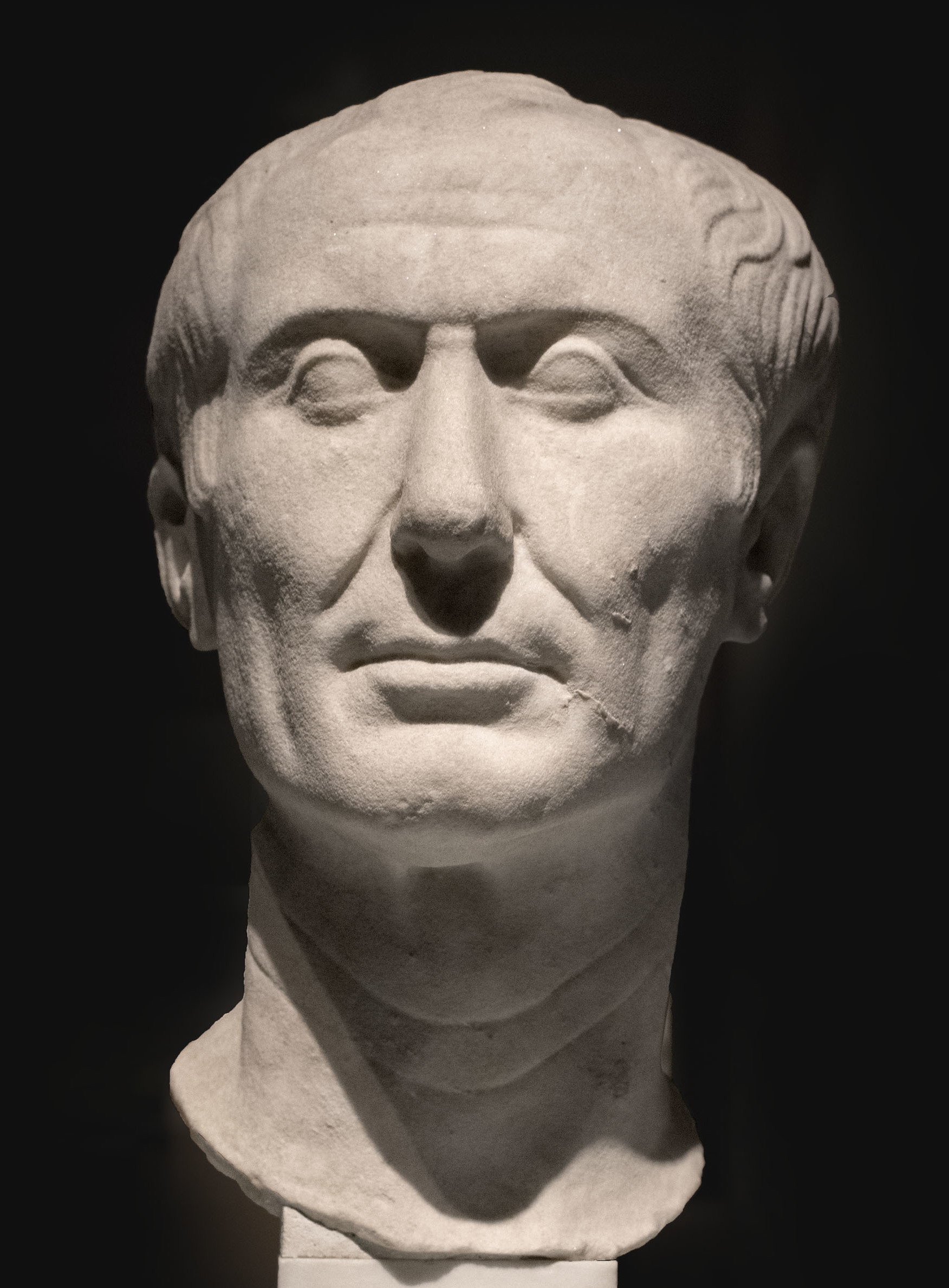
Kidnapped and held for ransom, the young Caesar told his captors exactly what he would do to them once freed. They thought it was a joke. It was not a joke.