RevengeIdeas
Served Cold
Rome beat Carthage in war, then robbed it while it was down. A nine-year-old swore at an altar to collect the debt — and spent thirty years, one impossible mountain crossing, and Rome's bloodiest afternoon trying to pay it in full.
Carthage in the third century BC was the great maritime power of the western Mediterranean: a Phoenician foundation on the coast of what is now Tunisia, grown rich on trade, tribute, and a sprawling web of ports that reached from Sicily to Spain. Its wars were fought largely by hired men and subject levies, its politics run by a mercantile aristocracy, and its gods — Baal Hammon, Tanit — served by a priesthood the Romans would later remember with a mixture of horror and propaganda. Into this world, in 247 BC, was born Hannibal, eldest son of Hamilcar Barca, the most formidable general the city possessed. By the most repeated account — one Hannibal himself is said to have given decades later to King Antiochus of Syria — the defining moment of his childhood came at an altar. Hamilcar was about to sail for Spain, and the boy, perhaps nine years old, begged to come with him. His father agreed on a single condition. He led Hannibal to the altar, had him lay a hand upon the sacrifice, and made him swear that he would never be a friend of Rome. It is the kind of scene history is right to treat with suspicion; it is also the kind of scene that explains a life. Whatever the exact words, the son kept them with a consistency that would have unsettled even the father who extracted them.
The oath did not come from nowhere. For twenty-three years, from 264 to 241 BC, Carthage and Rome had ground against each other in the First Punic War, a contest fought mostly at sea and mostly over Sicily. Carthage, the older power, lost. The Treaty of Lutatius stripped it of Sicily and saddled it with a heavy indemnity, to be paid out over years it could ill afford. Hamilcar, who had fought the Romans to a standstill in Sicily and was never beaten in the field, regarded the peace as a surrender his city's politicians had signed over his head. Worse followed, and it is the worse that the ancient writers single out. No sooner was the war over than Carthage's unpaid mercenaries revolted, dragging the city into the savage internal conflict the historian Polybius called the Truceless War. While Carthage bled, Rome seized the moment — and the islands of Sardinia and Corsica — and when Carthage protested the theft, Rome declared that the protest itself was grounds for a fresh war and demanded a further twelve hundred talents to avoid it. Carthage, exhausted, paid and swallowed it. Polybius, no friend of Carthage, names this act of opportunism as the chief cause of the war that was to come. It was, in plain terms, a robbery committed against a man already on the ground. Hamilcar did not forget it, and he raised a son not to forget it either.
Revenge on this scale is not an act but a project, and the Barca family built it patiently in Spain. Denied Sicily, Hamilcar carved out a new Carthaginian dominion in the Iberian peninsula — its silver mines refilling the treasury, its warlike tribes refilling the ranks. He died around 228 BC, by most accounts drowned during a retreat, and command passed first to his son-in-law Hasdrubal, a diplomat who founded the great base of New Carthage, the modern Cartagena, and was assassinated in 221 BC. Then, at roughly twenty-five, Hannibal took the army. He had been raised in the camp and trained for precisely this. The soldiers, who had known him since boyhood, are said to have welcomed his appointment as though their old general had been handed back to them. He spent two years securing Spain, and then he found his pretext. South of the river Ebro — the boundary Carthage and Rome had fixed by treaty — stood the city of Saguntum, which had placed itself under Roman protection. In 219 BC Hannibal besieged it. The siege lasted eight months; the city fell; and Rome, which had not lifted a hand to save its ally in time, sent envoys to Carthage demanding that Hannibal be surrendered for the offence. The Carthaginian senate refused. By the spring of 218 BC the two cities were at war again — and this time the Carthaginian meant to choose the ground.
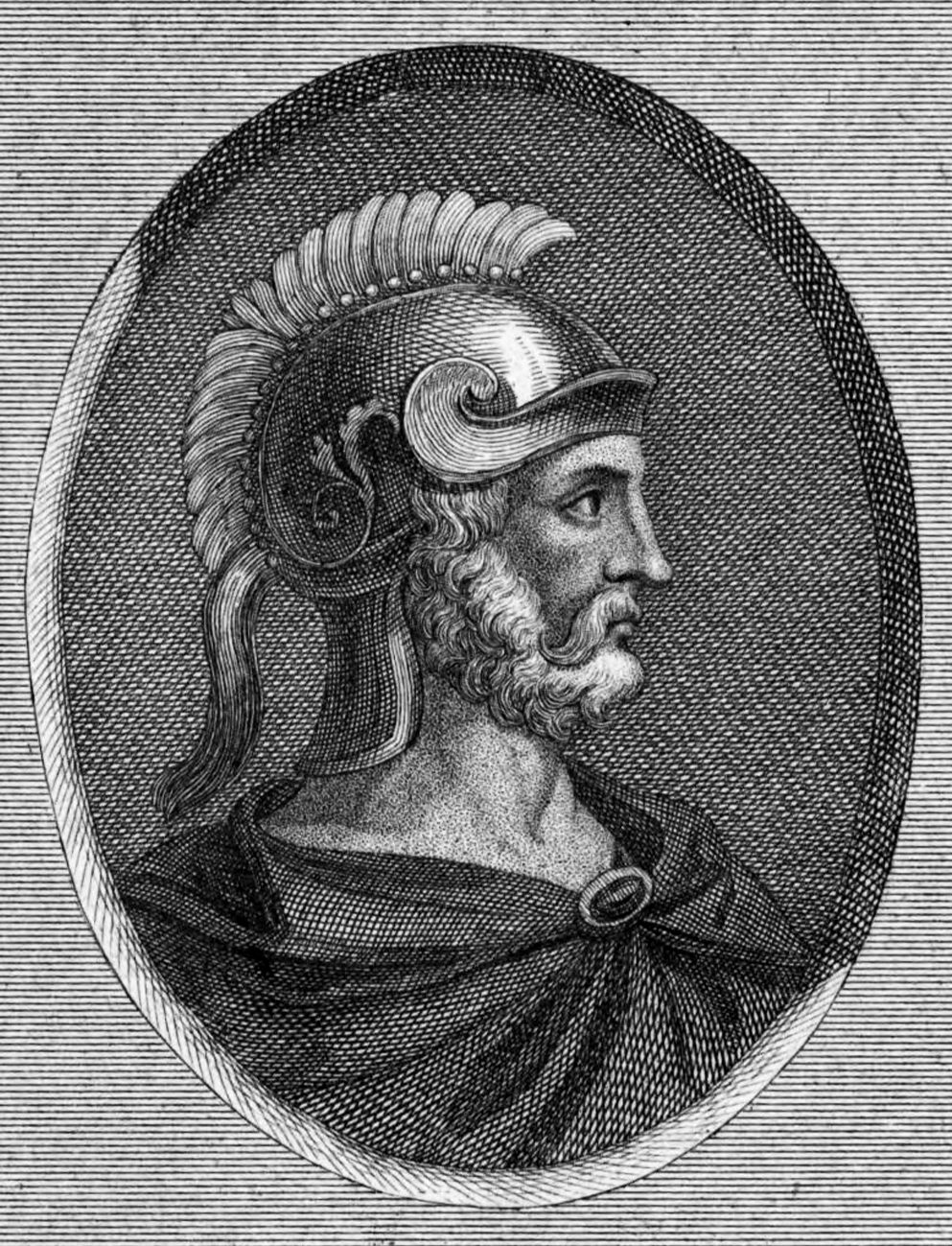
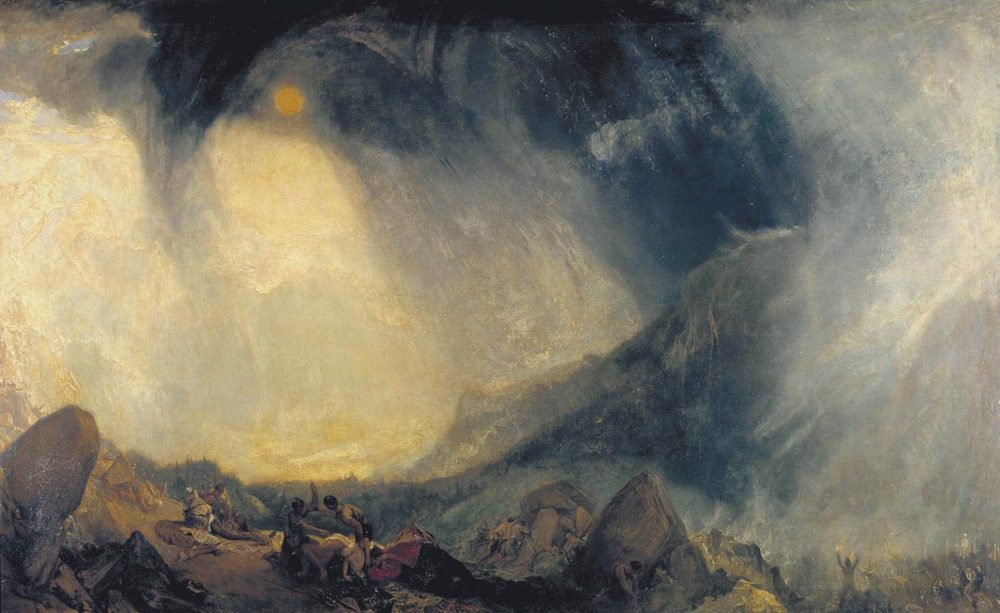
Rome expected to fight in Spain and Africa, as before. Hannibal proposed to fight in Italy. Rather than wait for the legions to come to him, he would march overland — across the Pyrenees, across southern Gaul, across the Rhône, and over the Alps — and fall upon the Roman homeland from the one direction no one guarded. It was a design of breathtaking audacity, and it nearly destroyed him before a single pitched battle was fought. He set out in 218 BC with a large army and a corps of war elephants, shedding men at every barrier. The crossing of the Rhône, with the elephants ferried over on earth-covered rafts past hostile Gauls, was merely the prelude. The Alps, attempted as autumn turned to winter, were the ordeal: narrow tracks, landslides, snow, and the constant ambushes of mountain tribes who rolled boulders down onto the column. By the most repeated figures Hannibal came down into Italy with perhaps twenty thousand foot and six thousand horse — possibly half of what he had led out of Spain — and only a handful of his elephants still alive. He had spent an army to reach the place where he could use one. The Romans, hearing that a Carthaginian had done the impossible and was already among them, were slow to believe it.
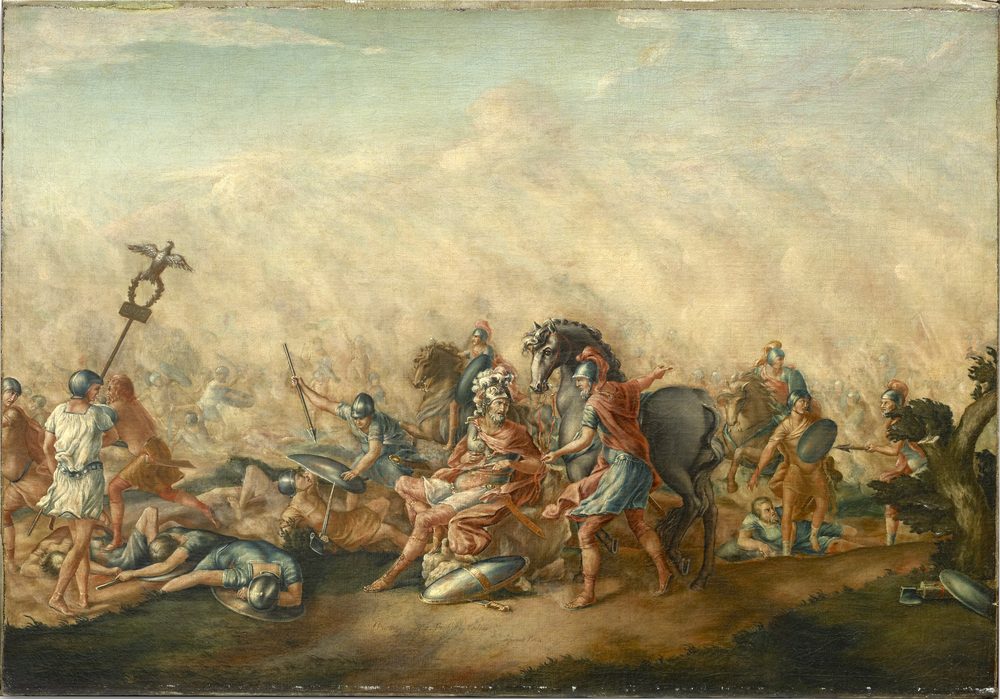
What followed was three years of catastrophe for Rome, delivered by a commander who seemed always to know what his enemy would do. At the river Trebia, late in 218 BC, Hannibal lured the consul Sempronius into attacking across cold water on an empty stomach, then shattered his army with a hidden force that struck the rear. The next year, at Lake Trasimene, he laid the largest ambush in ancient warfare, trapping the consul Flaminius against the lake shore in the morning mist and annihilating some fifteen thousand Romans, the consul among the dead. Then came Cannae, in 216 BC, the battle that academies of war still teach. Outnumbered, Hannibal arranged his line to bow forward at the centre and then deliberately give ground, so that the dense Roman mass pressed into a closing sack; his cavalry destroyed the Roman horse and swung round to seal the rear while his African veterans folded in from the flanks. A Roman army that may have numbered eighty thousand was encircled and butchered in an afternoon — by most accounts well over forty thousand killed, perhaps far more, in what remains one of the bloodiest single days any battlefield has known. The phrase Hannibal ad portas, "Hannibal at the gates," entered Latin as a byword for terror, and Roman parents would use it to frighten their children for generations. Yet he did not march on Rome. His cavalry commander Maharbal is said to have told him, "You know how to win a victory, Hannibal, but not how to use one." Whether the words were ever truly spoken, the judgement has clung to him. Carthage sent him too little and too late; the walls of Rome were strong; and the moment, if it ever genuinely existed, passed.
The astonishing thing about Cannae is what it failed to achieve. Any other state in the ancient world, having lost three armies and the flower of its aristocracy, would have sued for terms. Rome did not. It refused even to ransom its prisoners, raised fresh legions from boys and freed slaves, and adopted the patient method of Fabius Maximus — nicknamed Cunctator, the Delayer — who shadowed Hannibal, denied him battle, and let Italy's distances and Rome's manpower do the work no single general could. So Hannibal remained in Italy for fifteen years, undefeated in the field and unable to finish. He had counted on Rome's Italian allies deserting to him after Cannae; most did not, and those that did brought him sieges and reprisals rather than victory. He won smaller battles, took cities and lost them again, and watched his veteran army thin with no way to replace it so far from home. His brother Hasdrubal, marching from Spain to reinforce him, was intercepted and killed at the river Metaurus in 207 BC; the first Hannibal knew of it, by the most repeated account, was his brother's severed head thrown into his camp. The revenge had become a siege of attrition against a city that simply would not break.
While Hannibal held Italy, Rome at last found a general to match him. Publius Cornelius Scipio carried the war first to Spain, stripping Carthage of its Iberian base, and then to Africa itself, forcing Carthage to recall Hannibal from Italy in 203 BC to defend his own city. The two met at Zama in 202 BC. There the cavalry advantage that had won Cannae lay on the Roman side — the Numidian king Masinissa had gone over to Rome — and the elephants Hannibal sent forward were turned or funnelled into harmless lanes. Scipio won; Carthage surrendered. The terms were crushing: a vast indemnity, the loss of its fleet and its empire, and a clause forbidding it to make war at all without Rome's consent. Scipio took the name Africanus. Hannibal, for the first time, had been beaten. He did not stop being dangerous. As a magistrate he reformed Carthage's corrupt finances so effectively that the city could have paid Rome early — which alarmed Rome more than any army. Hounded by Roman pressure, he fled east, to Antiochus of Syria and then to Prusias of Bithynia, always a fugitive, always pursued by a republic that could not rest while he drew breath. Around 183 BC, cornered at last in a Bithynian town with Roman agents at the doors, he took the poison he is said to have long carried for the purpose. By the most repeated account his final words were a dry surrender of the game: that Rome could not bring itself to wait for an old man to die. He had outlived his war by nearly twenty years, and Rome had never once stopped being afraid of him.
The oath was never truly fulfilled — Hannibal did not bring Rome down — and yet it shaped the world more than most kept promises do. The terror he had branded into the Roman mind did not fade with his death; it curdled into a resolve that Carthage must never be permitted to threaten again. Half a century later the elder Cato ended every speech, on whatever subject, with the same refrain: Carthago delenda est — Carthage must be destroyed. In 146 BC Rome obliged, razing the city, selling its survivors into slavery, and erasing the rival that a single Barca had once carried to the very edge of victory. As a soldier, Hannibal won a stranger immortality. Cannae became the textbook example of the battle of annihilation, studied by commanders for two thousand years and consciously imitated by generals into the modern age. The man who lost the war is remembered as one of the greatest captains who ever lived, while the city he served is remembered chiefly for having been destroyed. Rome won — and then spent the rest of its history measuring every enemy against the one it had feared the most.
Image: Benjamin West, The Oath of Hannibal (1770). Public domain, via Wikimedia Commons.
Rome won the war in two decades and spent the next sixty too frightened to enjoy it. A boy's oath, it turns out, accrues interest.
They killed her husband, then sent ambassadors to ask her to marry their prince. She welcomed them warmly — and erased their entire people in four escalating acts of horror.
Kidnapped and held for ransom, the young Caesar told his captors exactly what he would do to them once freed. They thought it was a joke. It was not a joke.