
RevengeIdeas
Served Cold
A governor robbed and murdered a Mongol trade caravan. The Shah then beheaded the envoys sent to complain. What followed is still measured in millions.
By 1218 the Mongol confederation under Genghis Khan — born Temujin, proclaimed Khan of Khans at the kurultai of 1206 — had swallowed the steppe and reached into northern China. The campaign against the Jin dynasty was grinding and lucrative, but it was eastern work. To the west, beyond the Tian Shan and the deserts of what is now Kazakhstan, lay a different sort of power: the Khwarezmian Empire, a sprawling Muslim state ruled by Shah Ala al-Din Muhammad II. Khwarezmia was, on paper, the greater realm. It stretched from the Aral Sea to the Persian Gulf and from the Hindu Kush to the borders of Iraq, taking in the legendary caravan cities of Samarkand, Bukhara, Merv, Herat and the capital at Gurganj (Urgench). Its wealth came from the Silk Road, its armies were large, and its sultan styled himself a world-conqueror in his own right, having recently humbled the Qara Khitai and the Abbasid Caliph's allies. It was, however, a young and brittle empire. Muhammad had expanded fast and ruled through a fractious Turkic military aristocracy. His own mother, Terken Khatun, commanded the loyalty of the Qangli Turk officers who formed the spine of the army, and she ran what amounted to a rival court. The Shah's authority was broad but shallow — a crucial fact that the events of the next three years would expose with terrible thoroughness.
Genghis Khan, at this point, was not looking for war in the west. The chronicles are consistent on this. He had his hands full with China, and what he wanted from Khwarezmia was trade. The Silk Road that ran through Muhammad's cities was the richest commercial artery in the world, and a Mongol empire newly flush with Chinese plunder had goods to move and gold to spend. Around 1218 the Khan sent an embassy proposing a commercial treaty. According to Juvayni, the Persian historian who wrote a generation later with access to Mongol-era records, Genghis is said to have addressed the Shah in conciliatory, almost deferential terms, calling for open and protected trade between their realms. He followed the embassy with a great caravan — the sources give around 450 to 500 men, mostly Muslim merchants travelling under Mongol protection, with roughly a hundred camels laden with silver, jade, silk and other luxuries. The caravan was a statement of intent. It was diverse, commercial, and conspicuously unthreatening. Its destination was Otrar, a prosperous trading town on the Syr Darya river and the gateway through which goods entered Khwarezmia from the east. There it met Inalchuq, the governor of Otrar, a kinsman of the queen mother who bore the honorific title Ghayir Khan. And there the trouble began.
By the most repeated account, the governor Inalchuq coveted the caravan's wealth — or claimed to suspect the merchants of being Mongol spies, a charge that may have been a convenient pretext. He had the entire party arrested and seized the goods. The chroniclers report that one merchant escaped, fled back across the steppe, and brought word to Genghis Khan of what had happened to the rest: they were put to death, and the immense cargo divided up. Whether Inalchuq acted on his own greed or with the Shah's knowledge is debated. Several sources suggest he wrote to Muhammad for authorisation and that the Shah, reckless and perhaps resentful of the Khan's growing power, gave it. Either way the killing of some five hundred merchants travelling under a sworn diplomatic guarantee was an extraordinary provocation — a violation not only of trade but of the steppe's most sacred convention, the inviolability of envoys and the obligations of hospitality. Genghis Khan's response was, at first, restrained — and this restraint is what makes Otrar so damning in retrospect. He did not march. Instead he sent a second embassy directly to the Shah: by the chronicles' account three envoys, one a Muslim and two Mongols, demanding that Inalchuq be handed over for punishment and the breach repaired. He was offering Muhammad a way to keep the peace. The Shah's answer would foreclose every other option.
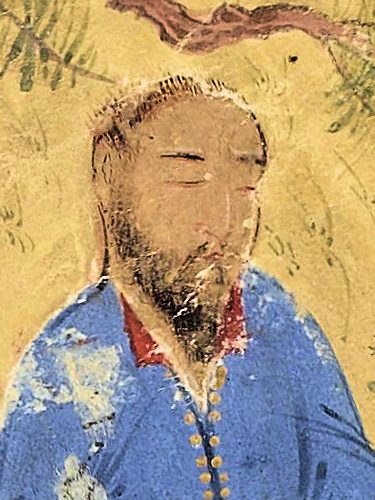
Muhammad II refused the demand outright. Worse, he had the chief envoy executed and, according to the most widely cited tradition, ordered the beards of the two surviving Mongol ambassadors shaved off before sending them back to their Khan in humiliation. To a steppe people for whom the beard was a mark of dignity and the killing of an envoy an absolute taboo, this was not merely an insult. It was a declaration that no settlement was possible. The sources describe Genghis Khan's reaction in terms unusual for him. Juvayni and the later compiler Rashid al-Din — vizier-historian of the Ilkhanate, with access to Mongol oral tradition — record that the Khan withdrew alone to a hilltop, bared his head, and is said to have prayed for several days, asking Heaven for the strength to take vengeance, declaring that he had not been the author of this war. The image, whether literal or stylised by Muslim chroniclers writing under Mongol patrons, captures the pivot: a man who had wanted a trade deal now committing to total war. The arithmetic of the grievance is worth stating plainly. A caravan robbed. Five hundred merchants killed. Three envoys sent to seek redress; one beheaded, two mutilated. For this, Muhammad's empire would be ground to powder. The disproportion is the whole point — but it was disproportion the Shah had repeatedly chosen, at every junction where a lesser insult might have sufficed.
Genghis Khan settled affairs in the east, secured his rear with the Jin, and in 1219 marched west with an army the sources variously place between 100,000 and 200,000 — almost certainly fewer men than the Shah could field, but commanded with a unity and operational genius the Khwarezmians could not match. Crucially, Muhammad made the fatal decision not to meet the Mongols in one great battle but to disperse his forces among the fortified cities, trusting his walls. This handed the initiative entirely to the invaders. The Mongols divided into columns and converged on Khwarezmia from multiple directions, including a march through the Kyzylkum desert that the Shah had thought impassable, led by Genghis himself, which delivered an army unexpectedly behind the frontier defences. Otrar, where it had all started, was besieged first. The town held for around five months. When it fell in 1220, the governor Inalchuq — the man whose greed had lit the fuse — was taken alive. Tradition holds that he was executed by having molten silver poured into his eyes and ears, a punishment fitted, with grim symmetry, to the metal he had stolen. From Otrar the campaign accelerated. Bukhara fell in February 1220 after a brief resistance; Genghis is said to have ridden into the great mosque and addressed the population, calling himself, by Juvayni's celebrated phrase, the punishment of God sent against them for their sins. The citadel was stormed, the city looted, and much of it burned. Samarkand, the Shah's showpiece, surrendered within days when its huge garrison's sorties failed. The pattern was set.
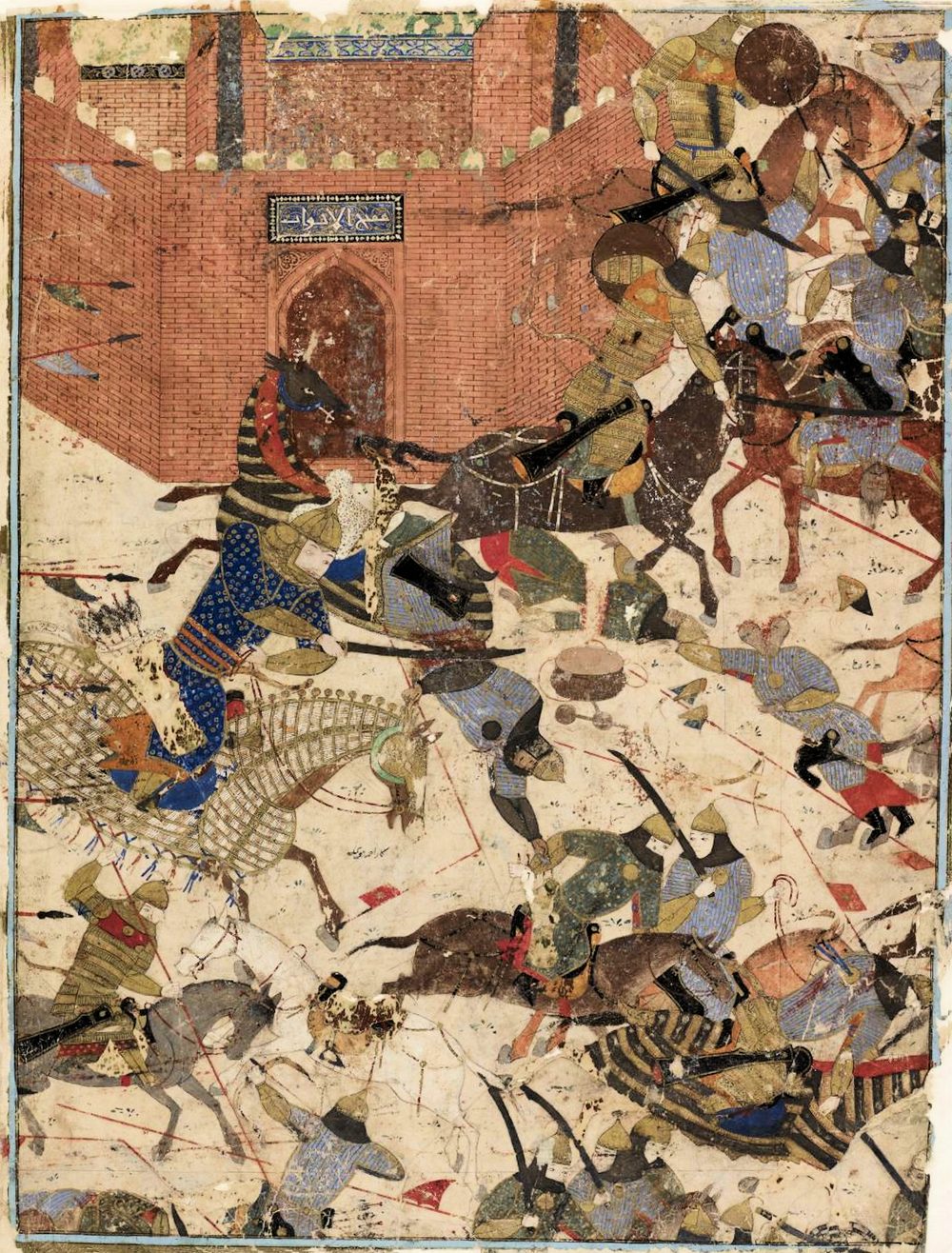
What followed was systematic. Cities that surrendered promptly were plundered and levied for troops and craftsmen; cities that resisted, or that rebelled after surrendering, were destroyed and their populations massacred as a matter of policy — terror deployed deliberately to make further resistance pointless. The artisans were spared and deported east, the young men were driven forward as human shields and labour for the next siege, and the rest were killed. The worst fell on the cities of Khorasan. Gurganj, the capital, resisted bitterly; the Mongols are said to have broken the dams of the Amu Darya and flooded the ruins after the slaughter. Merv, one of the largest cities in the world, surrendered in 1221 to Tolui, Genghis's youngest son, and was massacred almost to the last soul; the survivors who crept out afterwards were hunted down. Nishapur, where Genghis's son-in-law Toquchar had been killed by an arrow, was annihilated with particular ferocity — the chronicles claim the skulls of men, women and children were piled in separate pyramids. Herat, Balkh, Bamiyan and Termez followed. The medieval body-counts — Juvayni and the Arab historian Ibn al-Athir give figures in the hundreds of thousands per city, well over a million in total — are certainly inflated, as such numbers always are. But the qualitative truth survives the arithmetic. Whole urban civilisations of Central Asia and eastern Persia, centres of learning and trade a thousand years in the making, were depopulated in the space of two or three years. The sophisticated irrigation networks that made the land fertile were wrecked, and some never recovered.
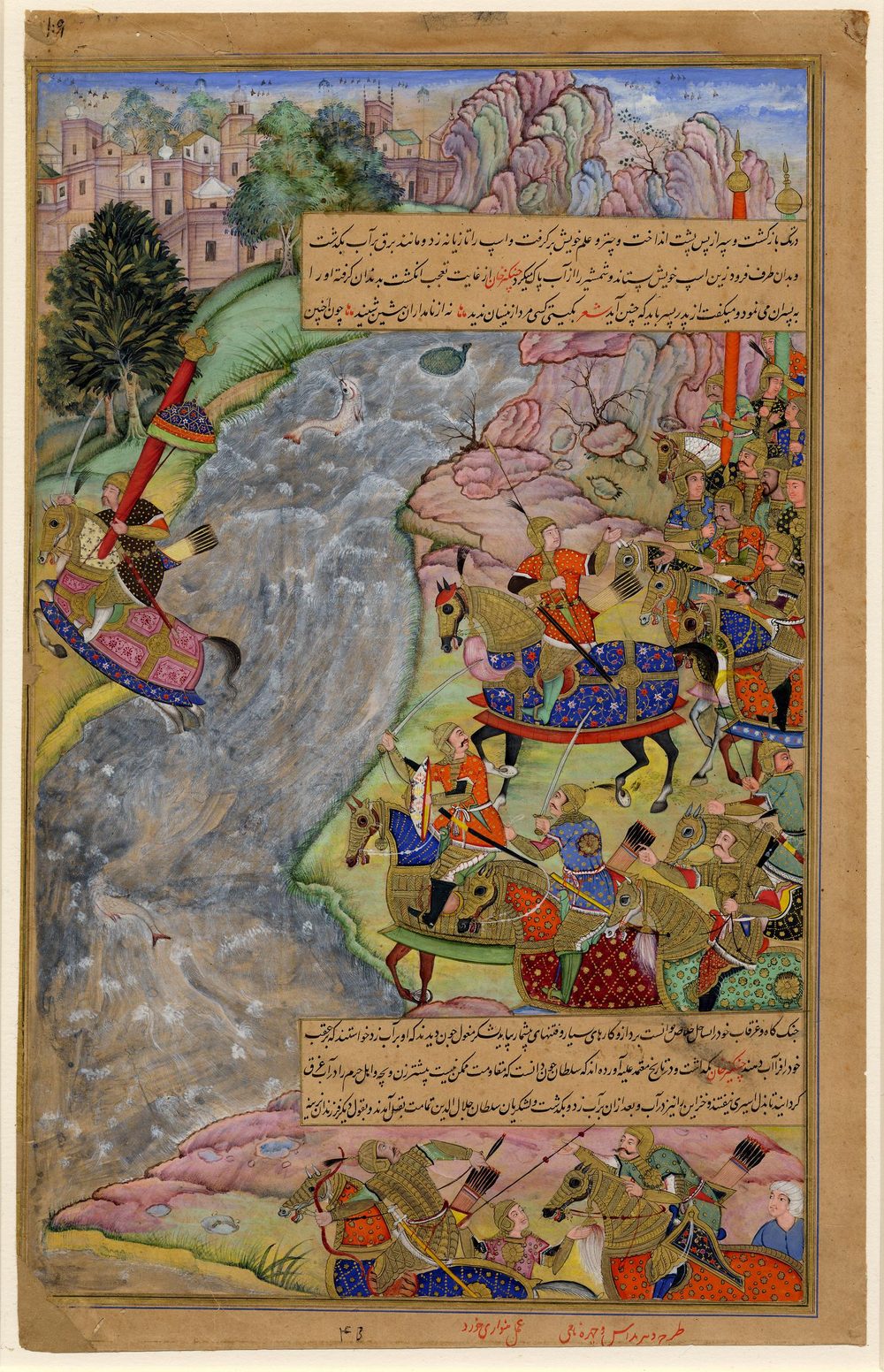
Shah Muhammad II, the man who could have prevented all of it, did not die in battle. As his empire collapsed around him he fled west, pursued relentlessly by two of the Khan's finest generals, Jebe and Subutai, who chased him across Persia in one of the most remarkable cavalry pursuits in history. Run to ground and abandoned, Muhammad escaped to a small island in the Caspian Sea, where he died in 1220 or 1221 — by the chronicles' account ill, destitute and reduced to such poverty that there was no shroud to bury him in. The world-conqueror was wrapped in the shirt of one of his few remaining servants. His son Jalal al-Din Mingburnu inherited the wreckage and fought on with real courage, even inflicting a rare defeat on a Mongol detachment at Parwan. But Genghis pursued him to the Indus in 1221, shattered his army on the riverbank, and watched him plunge his horse into the river and swim to safety in India — a feat the Khan is said to have admired aloud. Jalal al-Din spent the rest of his life as a fugitive warlord and was killed in obscurity in 1231. The dynasty was finished. Meanwhile Jebe and Subutai, having run the Shah to his death, were given permission to continue west on a reconnaissance in force. They rode around the Caspian, crushed the Georgians, and in 1223 destroyed a combined Rus and Cuman army at the Kalka River — the first time Europe felt the Mongols at all. That detour, an afterthought of the Otrar war, foreshadowed the invasions that would reach Hungary and Poland a generation later.
The destruction of Khwarezmia altered the trajectory of a whole region. The cities of Transoxiana and Khorasan that had been intellectual and commercial capitals of the Islamic world were broken, and the centre of gravity of Persian civilisation shifted. The ruined irrigation of Merv and the Khwarezmian heartland meant that some districts that had supported dense populations reverted toward desert and steppe. Historians have long debated how much of Central Asia's later decline traces back to these three years; the question is contested, but no serious account treats the campaign as anything less than a civilisational rupture. For the Mongols it was the making of an empire. The western campaign turned a steppe confederation into a Eurasian power, opened the road to Persia and Russia, and seeded the later Ilkhanate that would rule Iran for a century — under which, with characteristic irony, Juvayni and Rashid al-Din would write the very histories that preserve the story. The men who recorded the catastrophe did so as administrators for the conquerors' heirs. What lingers is the cause. Great wars usually have great causes — disputed successions, religious schisms, the ambitions of states. This one began with a robbed caravan and a humiliated embassy, with a provincial governor's greed and a shah too proud to surrender one man for punishment. Genghis Khan had asked for trade. He had been answered with theft, murder, and a pair of shaved beards. The chronicles, written by the losers' descendants for the winners' patrons, never quite resolve whether what followed was justice, madness, or simply the logic of power once it has been given an excuse.
Image: Yuan-dynasty portrait of Genghis Khan (14th c.), National Palace Museum. Public domain.
It remains the textbook example of disproportionate response: an empire of millions destroyed over a stolen caravan and a shaved beard.
They killed her husband, then sent ambassadors to ask her to marry their prince. She welcomed them warmly — and erased their entire people in four escalating acts of horror.
Kidnapped and held for ransom, the young Caesar told his captors exactly what he would do to them once freed. They thought it was a joke. It was not a joke.