
RevengeIdeas
Served Cold
She had spent years watching a younger rival try to steal her son's throne. When her husband the emperor died, there was no one left to protect that rival.
Lü Zhi was born around 241 BC into a family of some local standing, and she was married, while still young, to a man named Liu Bang. By the conventions of the age it was not an obvious match. Liu Bang was a minor official, a village headman in the district of Pei, fond of wine and women and notoriously casual about both money and dignity. The story preserved in Sima Qian's Records of the Grand Historian has Lü Zhi's father giving her to him on the strength of a fortune-teller's reading of the man's face — a marriage made on a hunch about destiny rather than on prospects. For years that hunch looked like a poor wager. Liu Bang spent stretches of their early marriage in hiding in the marshes, having let prisoners escape from a labour convoy he was supposed to be escorting, an offence that carried a death sentence. What followed was the most spectacular reversal in early Chinese history. The Qin dynasty, which had unified China under its first emperor, collapsed within a few years of that emperor's death amid revolt and civil war. Liu Bang rose with the rebellion, and over a long and brutal contest — chiefly against the aristocratic warlord Xiang Yu — he emerged victorious. In 202 BC he was proclaimed emperor and took the title that history knows him by: Gaozu, founding emperor of the Han dynasty, a dynasty that would last, with one interruption, for four centuries. Lü Zhi rose with him, and not as a decoration. During the wars she had been captured by Xiang Yu and held hostage for over two years, a captivity she survived without breaking. By the time her husband took the throne she was a hardened political actor in her own right, allied with the founding generals and intimately involved in the consolidation of the new regime. She was now Empress Lü, and her son, Liu Ying, was the heir apparent. That, she had every reason to believe, was settled.
An emperor did not keep one woman, and Gaozu kept many. Among them was Consort Qi — Qi Furen — a younger woman from Dingtao whom the emperor had taken during the campaigning years and come to love far more than the ageing wife who had shared his obscurity. Consort Qi was beautiful, accomplished, said to be a fine dancer and musician, and she travelled with Gaozu on his journeys while Lü Zhi increasingly remained behind in the capital. The emperor's affection was not the danger. The danger was that Consort Qi bore him a son, Liu Ruyi, whom Gaozu came to favour openly, and that she used her position to press, persistently, for that son to be made heir in place of Lü Zhi's Liu Ying. This was not a quarrel over jewellery or precedence. In a newly founded dynasty the question of succession was the question of everything — whose family would hold the empire, and whose would be discarded or destroyed when the music stopped. Gaozu thought his heir Liu Ying weak and mild, 'not resembling me', and inclined toward the bolder Ruyi. According to the histories he came close, more than once, to formally deposing the crown prince. Consort Qi wept and lobbied; the emperor wavered. For Lü Zhi, every one of those wavering moments was an existential threat to herself and her son both. The grievance, then, was specific and mortal. Consort Qi was not merely a rival for a husband's love — that Lü Zhi might have endured. She was attempting, with the emperor's sympathy, to disinherit Lü Zhi's son and elevate her own, an act that would have left the empress and the former crown prince at the mercy of whoever held power next. In the logic of the Han court, to lose that contest was very often to die for it. Lü Zhi understood the stakes precisely, because she had helped build the machine that produced them.
Lü Zhi did not weep, and she did not lobby. She schemed. Frightened for her son's position, she turned to Zhang Liang, the brilliant strategist who had been one of the principal architects of Gaozu's victory and whose judgement the emperor respected above almost anyone's. Zhang Liang was reluctant to meddle in a succession dispute — these were the quarrels that killed counsellors — but under pressure he offered a plan, and it was a subtle one. There were four famous recluses, elderly and learned men known as the Four Haos, the 'Four Whitebeards' of Mount Shang, whom Gaozu had long wished to attract to his court and who had refused him, offended by his coarse manners. Zhang Liang advised that the crown prince should send humble letters and rich gifts and persuade these four old men to attach themselves to him. The point was theatrical as much as practical. When Gaozu next saw his supposedly feeble heir attended by the very sages who had spurned the emperor himself, he would read it as a sign that the prince had won the regard of the realm's most respected men — that to depose him now would set the court against the throne. The histories record that it worked exactly as designed. At a banquet Gaozu saw the four white-haired men standing behind Liu Ying, asked who they were, and was told. He is said to have understood at once that the prince's position was stronger than he had thought, and to have abandoned the plan to disinherit him. Turning to Consort Qi, by the account in the Records, he told her plainly that the matter was beyond changing — the prince's wings were fledged — and that she should make the best of it. It was, for Lü Zhi, a victory of patience and cunning over passion. But it was a victory that settled only the politics. The hatred remained, and Lü Zhi was a woman who did not forget.
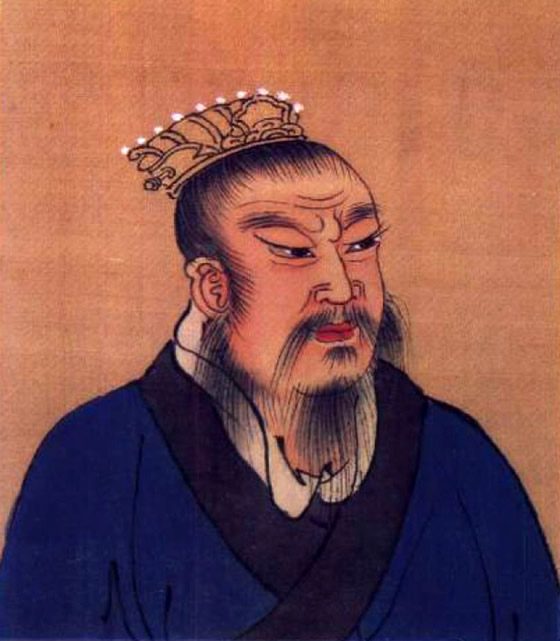
Gaozu died in 195 BC of a wound that had festered and of old age catching up with a hard-used body. With his death the one shield that had protected Consort Qi and her son was gone. The favour of a living emperor is a powerful thing; the favour of a dead one protects no one. Liu Ying succeeded as Emperor Hui, a young man of around fifteen, gentle by temperament, and his mother Lü Zhi became Empress Dowager — and, in practice, the ruler of the Han empire. She held the real power, and she had a long account to settle. Her first acts were measured by the standards of what was to come, but they were not merciful. She had Consort Qi seized, her hair shaved off, fitted with an iron collar and dressed in the red garb of a convict, and set to pounding rice in the imperial mills — the labour of the lowest prisoners. The woman who had danced for an emperor and nearly worn the rank of empress now ground grain under guard. According to Sima Qian, Consort Qi sang as she worked, a lament that her son was a prince far away in the kingdom of Zhao while she laboured in the dust, and asked who would carry word of her plight to him. It was a natural enough cry. It was also, as it turned out, a fatal one. The son, Liu Ruyi, was the real problem, and Lü Zhi knew it. A living prince of Gaozu's blood, the favoured son, the one the late emperor had wanted to make heir — he was a permanent rival and a permanent danger. He was king of Zhao, kept at a safe distance from the capital. The dowager meant to have him.
Lü Zhi summoned Ruyi to the capital. His chancellor, a man named Zhou Chang whom Gaozu had deliberately appointed to protect the boy, saw the danger and refused to let him go, sending back word that the king was ill. The dowager summoned the chancellor away first, and then summoned the boy again, and this time he came. He was perhaps ten years old. Here the histories record an act that complicates the story of pure villainy. The young Emperor Hui, Lü Zhi's own son, understood what his mother intended for his half-brother and tried to save him. He went out to meet Ruyi, brought him into the palace, kept the boy at his own side, ate with him and slept in the same quarters, so that his mother could find no moment to strike at the prince without striking through the emperor. For weeks this guardianship held. Then, one morning, the emperor rose early to go hunting and Ruyi, a child, would not wake and was left behind. By the time Hui returned, the boy was dead — poisoned, the histories say, on the dowager's order, in the brief window his brother's protection had slipped. With the son dead, Lü Zhi turned to the mother, and what she did to Consort Qi is the act for which her name has been remembered for over two thousand years. She had Qi's hands and feet cut off, her eyes gouged out, her ears destroyed and her power of speech taken by a poison or by mutilation, and the living remnant of the woman thrown into a latrine. According to the Records of the Grand Historian, the dowager called this creation a 'human swine' — ren zhi — and after some days, in what reads less like cruelty than like a deliberate display of total triumph, she sent for her son the emperor to come and look at what she had made.
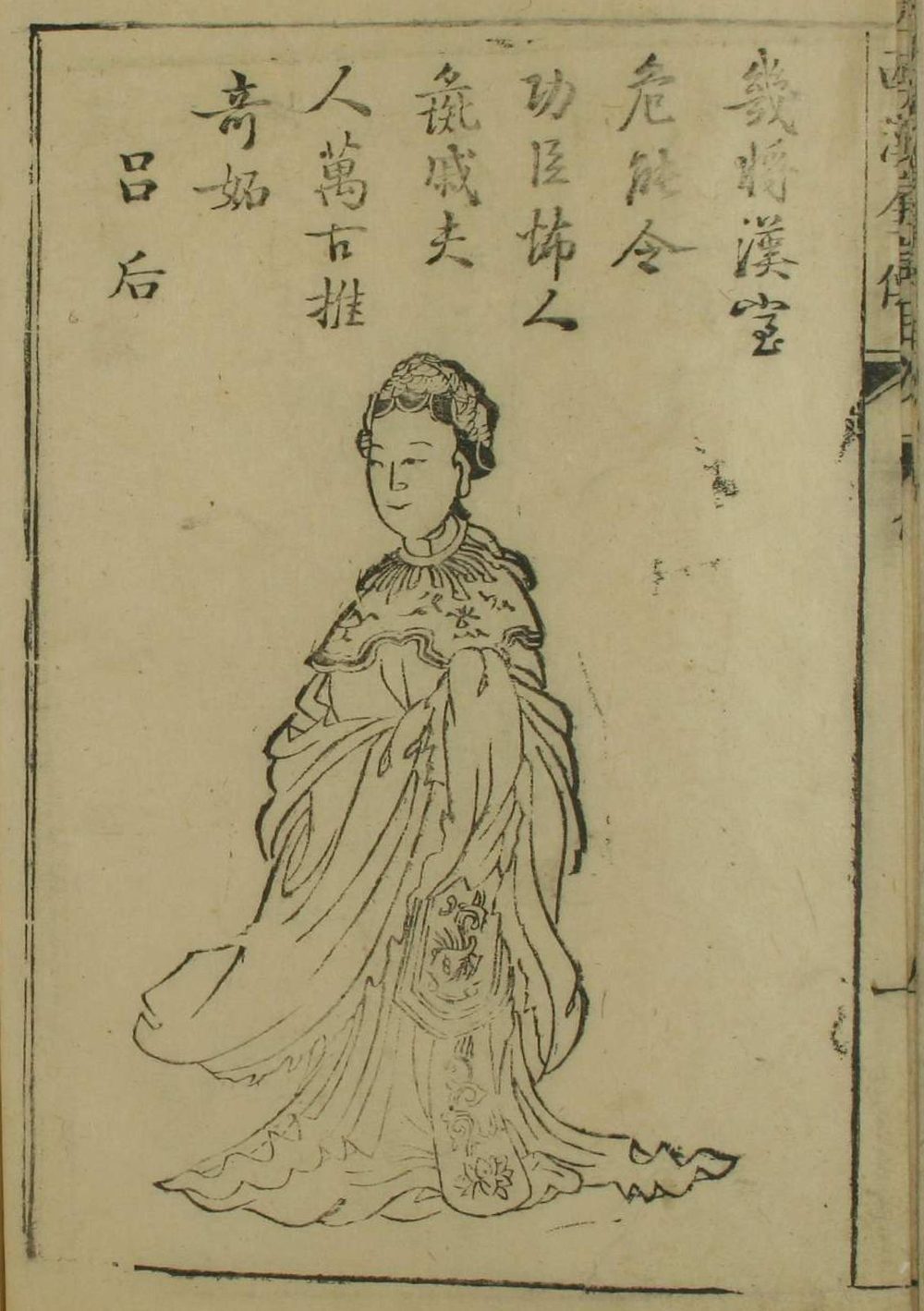
Emperor Hui did not at first know what he was being shown. He looked at the mutilated thing in the privy, and according to Sima Qian he had to ask what it was before he was told that this had been Consort Qi. The account says he wept aloud, fell ill, and was bedridden for a long time. Then he sent a message to his mother that is among the most quoted lines in early Chinese history. 'This was not the deed of a human being,' he is recorded as saying. 'As the son of the empress dowager, I will never be fit to rule the empire.' Whatever Lü Zhi had expected from the display, this was not it. She had shown her son her absolute victory and he had recoiled from her in horror. From that point the histories describe Hui as a broken man. He gave himself over to drink and pleasure, withdrew from the business of government, and declined to govern in any meaningful sense, leaving the real power exactly where it already sat — in his mother's hands. He died in 188 BC, still a young man, after seven nominal years on the throne, with no surviving legitimate heir who could escape his mother's control. The revenge had been total, and one of its casualties was the relationship between the avenger and the very son for whose sake the whole long contest had supposedly been fought. It is the detail that lifts the episode out of mere atrocity and into the realm of tragedy. Lü Zhi had spent years protecting Liu Ying's right to rule. When she finally destroyed the people who had threatened it, she destroyed her son's capacity, or his willingness, to rule at all.
With Emperor Hui dead, Lü Zhi ruled openly. She placed infant emperors on the throne and governed as regent, and when one such child-emperor learned that she was not his true mother and spoke rashly of revenge when he grew up, she had him quietly confined and replaced. She elevated the men of her own Lü clan to kingships and high command, in flat violation of a famous oath Gaozu had extracted from his followers that only members of the Liu family should ever be made kings. For roughly sixteen years after her husband's death — through Hui's reign and the regencies that followed — Lü Zhi was the effective sovereign of the Han empire, the first woman to hold such power in Chinese history. By the harder measures of statecraft, hers was not an incompetent rule. The histories, even while condemning her cruelty, concede that the empire was largely peaceful in these years, that the punitive laws inherited from the Qin were eased, that the people were not heavily burdened, and that the realm recovered from the exhaustion of the founding wars. Sima Qian's verdict is notably balanced: he records the horrors without flinching, but he also writes that under her the common people enjoyed rest from war and that government rested lightly upon them. Power, in her hands, was used as well as it was seized. It did not outlive her. Lü Zhi died in 180 BC, and within weeks the Liu princes and the old founding ministers, led by men such as Zhou Bo and Chen Ping, moved against the Lü clan, accused them of plotting to usurp the throne outright, and exterminated them — men, women and children. The family the dowager had spent her life elevating was wiped out almost as soon as she was no longer there to protect it. The throne passed to one of Gaozu's surviving sons, who reigned as Emperor Wen and is remembered as one of the most admired rulers of the dynasty.
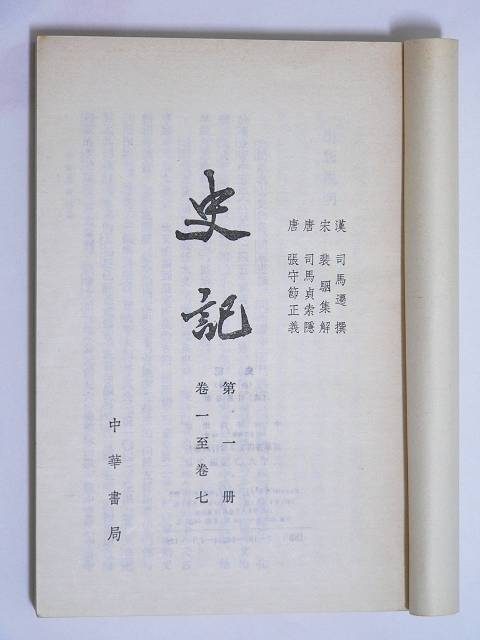
Lü Zhi's reputation was fixed within a century of her death by the very historians who recorded her achievements. Sima Qian gave her the dignity of a 'basic annal', the form of record reserved for reigning sovereigns, an extraordinary acknowledgement that she had truly ruled — and then filled that annal with the latrine and the human swine. The later Confucian historians who shaped the moral memory of the dynasty had no difficulty deciding which detail mattered most. She became, and has remained for two thousand years, the archetype of the cruel and grasping empress, the cautionary figure invoked whenever a woman approached real power at the heart of the Chinese state. The Tang dynasty's Empress Wu and the Qing dynasty's Empress Dowager Cixi would both be measured, by their critics, against Lü Zhi. That judgement is not wholly fair, and the sources themselves know it. The same pages that describe the mutilation of Consort Qi also describe a steady hand on a fragile new state, a deliberate lightening of the people's burdens, and sixteen years without the civil wars that had nearly consumed the country a generation before. Historians since have argued that her ferocity toward the Lü clan's rivals was the ordinary, if extreme, logic of a court in which losing the contest meant the annihilation of one's whole family — the very fate that did, in the end, befall her own people. But it is the human swine that endures, because it is the part of the story that no political balance-sheet can absorb. Lü Zhi had been wronged, genuinely and dangerously, by a woman who tried to take her son's throne. She waited, she out-manoeuvred her rival while her husband lived, and when he died she took a revenge so complete that nothing of Consort Qi or her line remained. It is, on its own terms, one of the most thorough acts of vengeance the historical record preserves. The chronicles simply never let the reader forget what it looked like — or what it did to the one person she had meant to protect.
Image: Qing-era illustration of the Han dynasty (東西漢全傳). Public domain, via Wikimedia Commons.
She won completely — her rival destroyed, her power absolute. The cost was that her own son never looked at her the same way again.

They killed her husband, then sent ambassadors to ask her to marry their prince. She welcomed them warmly — and erased their entire people in four escalating acts of horror.
Kidnapped and held for ransom, the young Caesar told his captors exactly what he would do to them once freed. They thought it was a joke. It was not a joke.